

Lau here, writing from Slovenia.
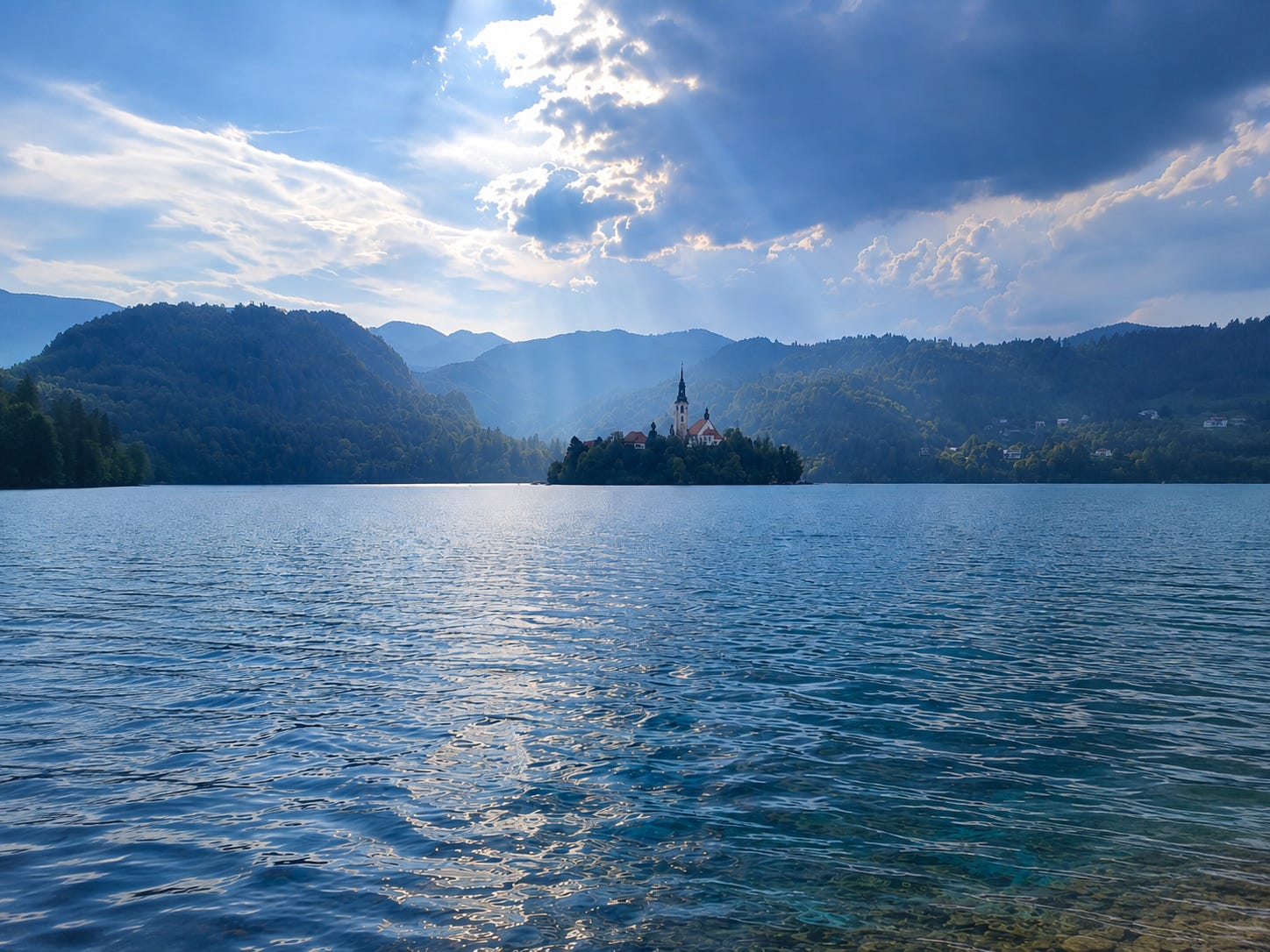
Most of my week is work, and my family made peace with that a long time ago. But Sundays I try to get everyone out of the house and go and look at something. This Sunday it was Lake Bled.
It’s a small lake in the Julian Alps with an island in the middle of it and a church on the island, and it is every bit as pretty as the photographs suggest.
But that isn’t the only reason I wanted to go.
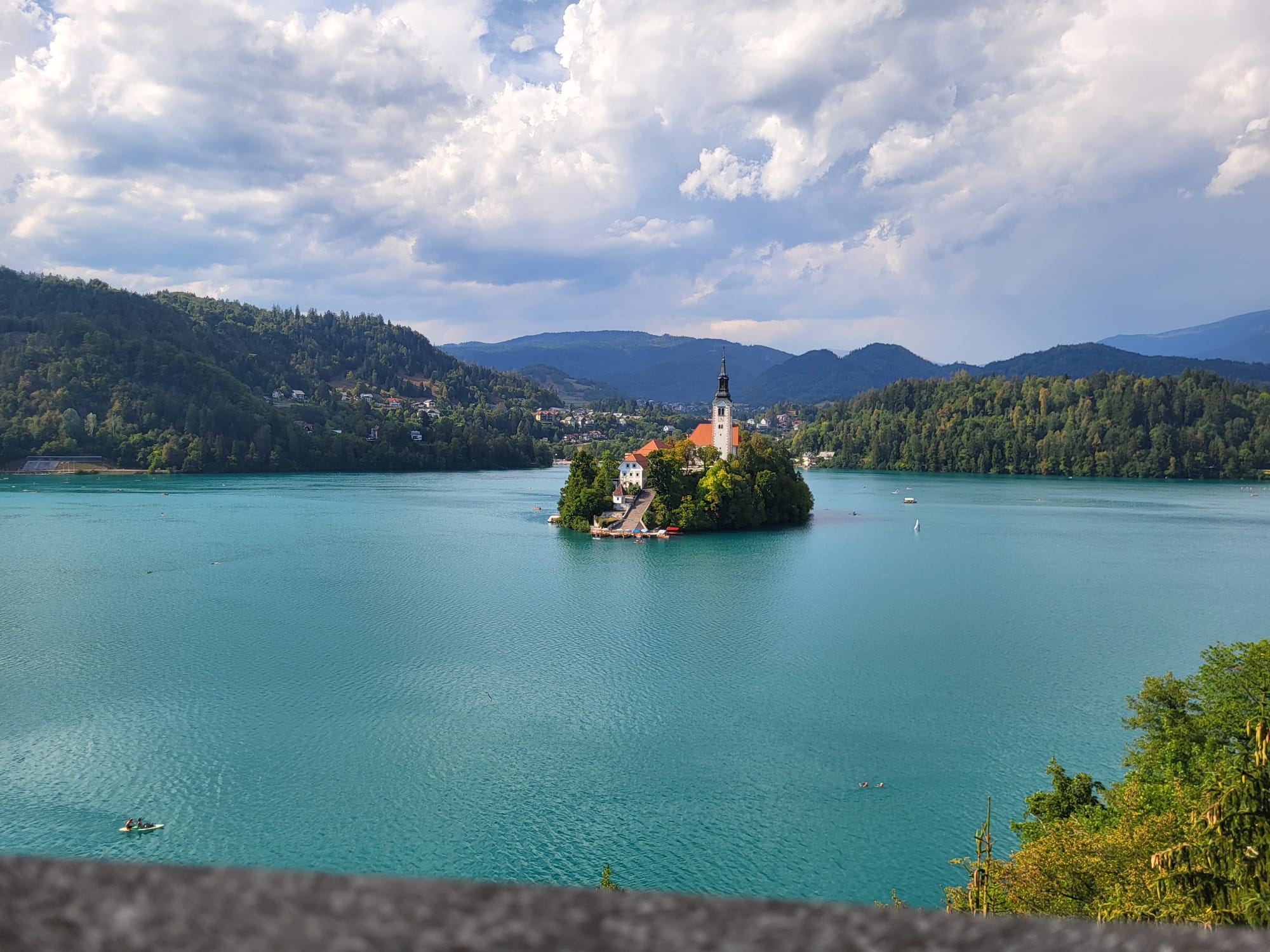
Bled was Tito’s. On the northern shore sits Vila Bled, which he had built for himself in 1947 on the site of the old royal summer house, and which stayed the most exclusive address in Yugoslavia until he died. It’s a hotel now. And above it, up a flight of steps from the lakeside path, there’s a pavilion on stone pillars called the Belvedere, built originally as a waiting room for people hoping for an audience with the king. Tito used it as his tea house. Today it’s a café, open to anyone who climbs the stairs.
So we climbed the stairs and ordered cake, and I can report that the view is worth it. You look straight down on the island and the church sitting on top of it, ninety-nine stone steps up from the water.
Not a bad spot from which to run a country.
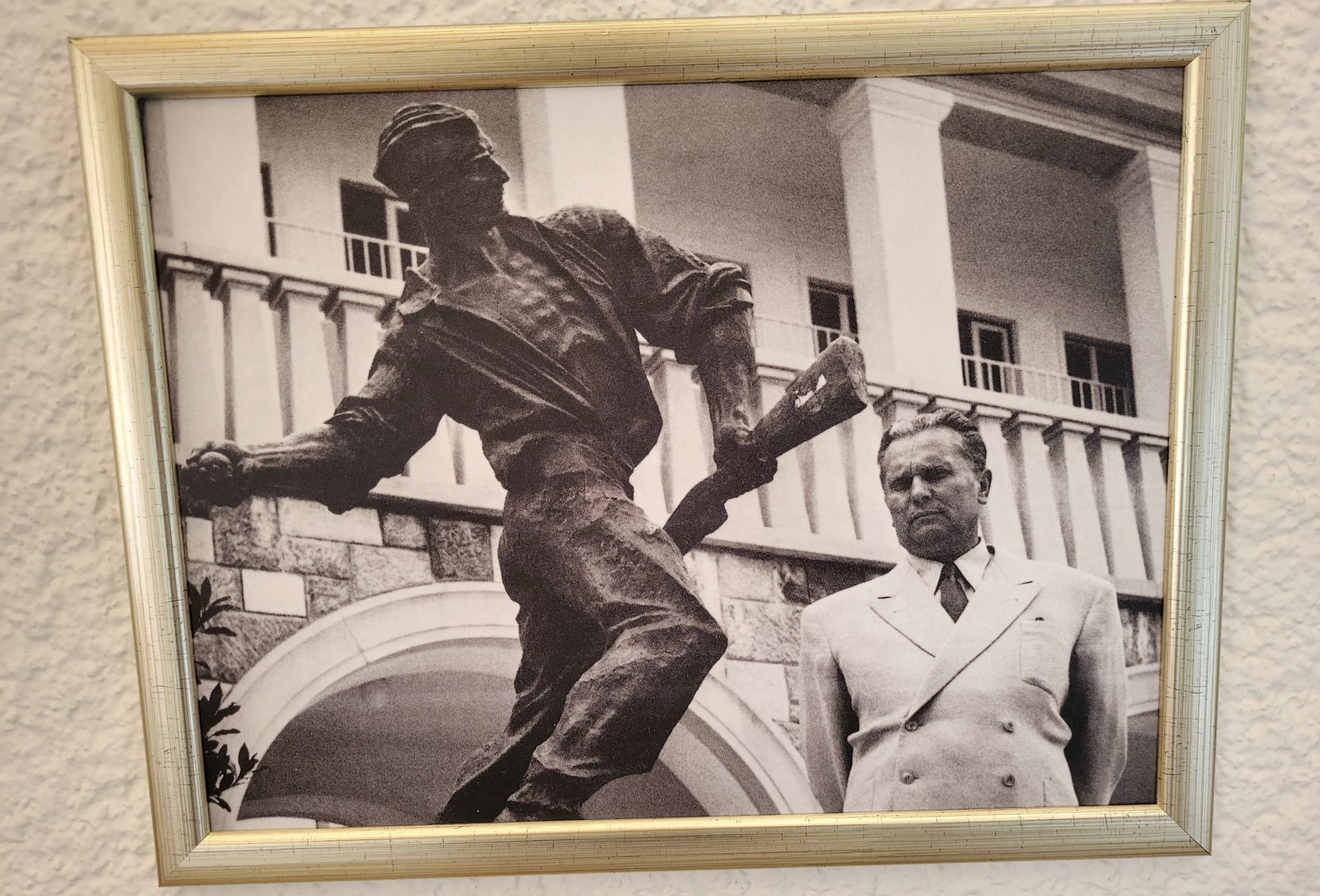
If the name doesn’t mean much to you, Josip Broz Tito ran Yugoslavia from the end of the Second World War until his death in 1980.
Now, ruinous ideology aside, Tito was surely one of the more fascinating characters of the last century. A Croatian metalworker who fought for Austria-Hungary, took a Russian cavalryman’s lance in the back in 1915, and spent the next five years watching a revolution and a civil war from the inside. Having come home a communist, he spent two decades organizing, in and out of prison. Then the Germans invaded, he took to the mountains with the Partisans, and by 1945 Yugoslavia was one of the few countries in Europe liberated largely by its own people.
But Tito’s taste for doing things his own way was also what put him at odds with his namesake in Moscow, Joseph Stalin.
Stalin ran the Soviet Union with an iron fist and expected the new communist states of Eastern Europe to behave as satellites. The trouble, again, was that Tito hadn’t been installed by the Red Army the way the others had. He’d taken the country with his own partisan army, so he didn’t think Moscow had any standing to give him orders.
Without going too far into it, the two ended up on a collision course. It came to a head in 1948, when Stalin had Yugoslavia thrown out of the Cominform, the body coordinating Europe’s communist parties, on charges of nationalism and hostility to the Soviet Union. The expectation in Moscow was that the Yugoslav party would take the hint and remove him.
Instead, the opposite happened. Tito purged the pro-Soviet faction, and thousands of suspected Stalinists were sent to Goli Otok, a prison camp on a barren Adriatic island.
What followed was economic isolation, incidents along the border, and a long run of Soviet attempts on his life. Tito, the story has it, eventually sent Stalin a note, found in the old man’s desk after he died.
Stop sending people to kill me. We’ve already caught five of them... If you don’t stop sending killers, I’ll send one to Moscow, and I won’t have to send another.
Of course, Tito was no more immune to the pleasures of the good life than any socialist before him or since.
Walking around Bled on Sunday, I was struck by the beauty of the surroundings, the views, the scale of the villa, the grounds around it, the sense that a great deal of money and care had gone into making one man's summer agreeable.
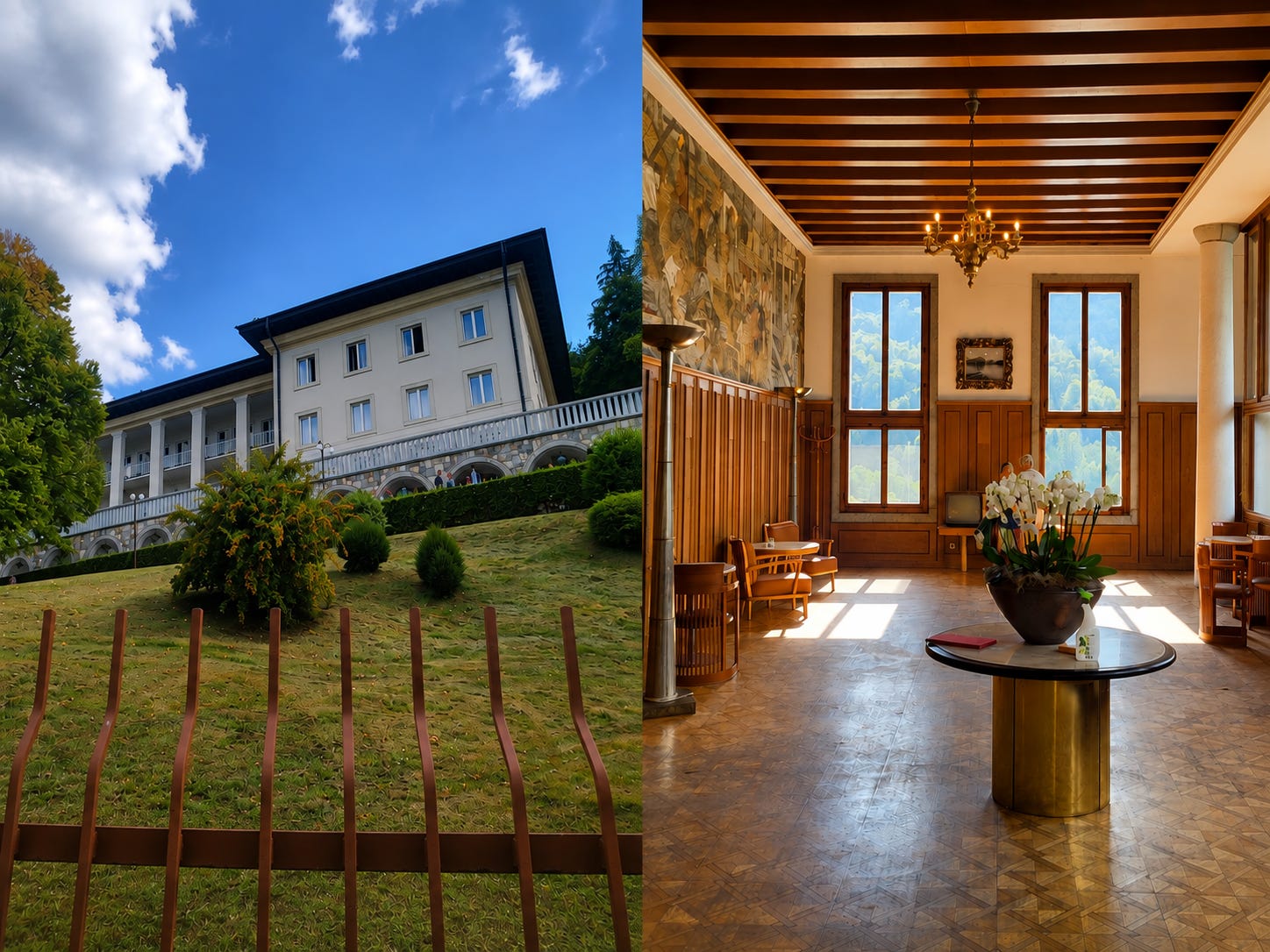
And Bled was only one of his residences. There were also the Brijuni Islands off the Croatian coast, complete with private villas and a safari park, presidential yachts, and a fleet of luxury cars (which we’re going to see this Sunday) along with countless other comforts ensuring the great socialist leader was always exceedingly well taken care of.
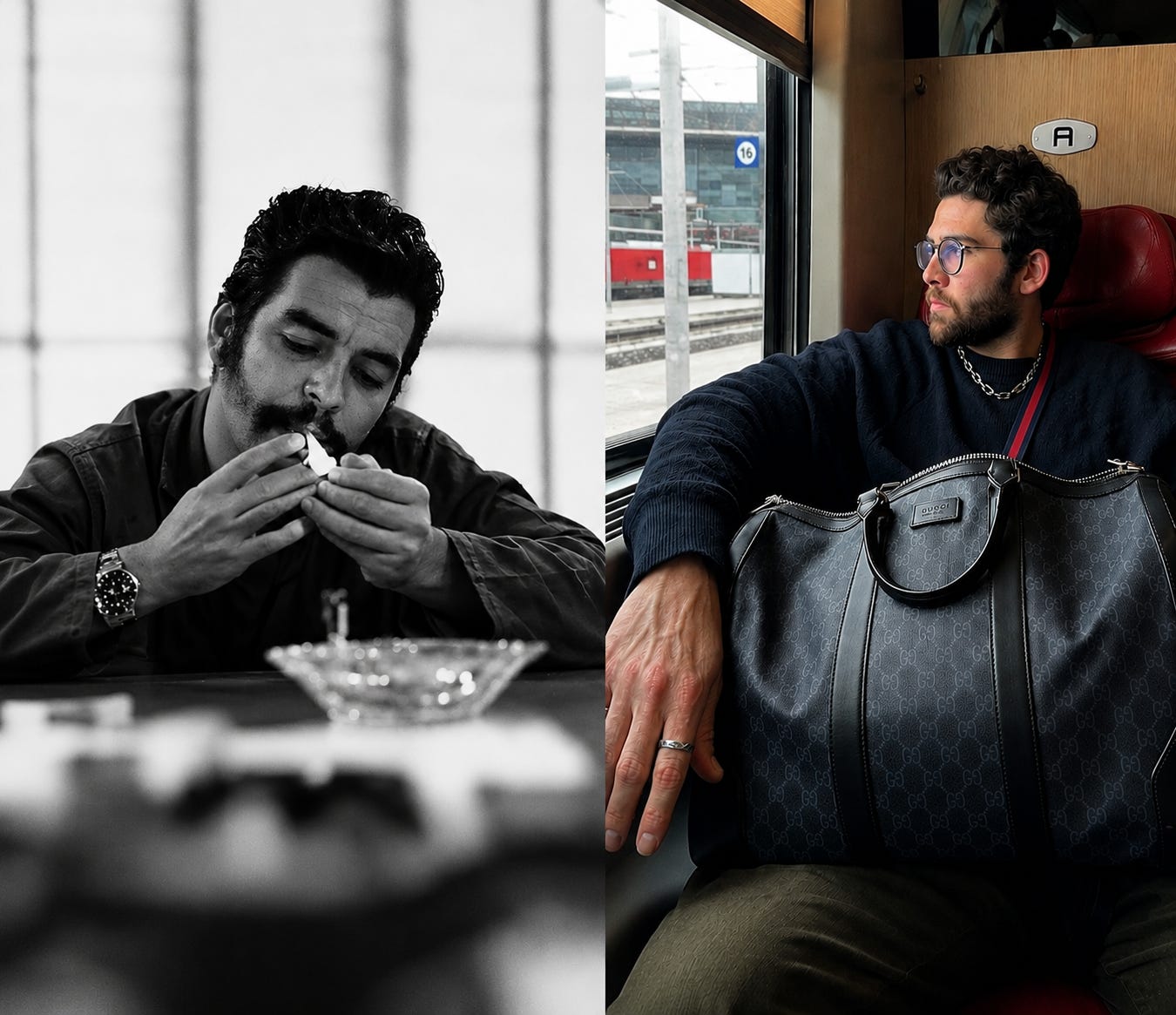
Basically the same story as Che and his Rolex, or Hasan Piker, the infamous socialist streamer who wears designer clothes, carries a Gucci bag and lives in a $2.74 million house near West Hollywood. Socialism for thee, but not for me.
Anyway, Tito died in 1980, and within little more than a decade the whole Yugoslav project had come apart, violently, in a series of wars whose consequences much of the region is still living with.
Except here.
Slovenia looked at what was coming and went its own way. It declared independence in June 1991 and immediately turned westward, cozying up to the rest of Europe.
Yes, there was a war with the Yugoslav People’s Army, but it lasted just ten days and killed fewer than eighty people on all sides. That’s next to nothing compared with what tore through Croatia and Bosnia in the years that followed.
None of this is to say Slovenia is exempt from the problems facing the rest of Europe today. The demographics are cratering, work is taxed heavily, and four decades after Tito the state still owns a remarkable amount of the economy, banks and utilities included. But it’s still a relatively prosperous, high-trust and thoroughly pleasant country (which I can report firsthand after spending the past week here).
That brings me to last week’s pieces, all linked below, including the alert I sent out Friday morning after two of our companies reported results in the same week.
The Government Just Asked for Another $739 Billion in Debt. For One Quarter.

If you needed any more evidence of just how far gone the U.S. government’s finances are, look no further than the Treasury’s own latest projections.

The Photograph That Bailed Out the Yen

So late last month, Treasury Secretary Scott Bessent walked past a huddle of photographers in Washington carrying a folder with a handwritten note clipped to the front. A Reuters camera caught it at just the right angle. A few words and a number, in plain block letters: “To do: buy Japanese yen. 5 to 10 billion.”
From the Comments
One of the things I’ve come to appreciate most about writing here is the conversation that happens in the comments. Here are six that stood out, for different reasons. Each one links back to the piece it appeared on, so you can click through if you’re interested in the context, including my replies and the conversations that followed.


Thanks again to everyone who left a comment last week. I read all of them, even the ones I don’t get a chance to reply to individually. Over the coming days, I’ll try to catch up on the questions and the longer threads.
See you in the comments this week.
Regards,
Lau Vegys
P.S. If you joined as a paid member last week, welcome aboard. A few links to help you find your way around:
The first recommendation: a uranium play, with the full thesis, buy-up-to price, and tranche levels.
The second recommendation: a silver pick, same treatment: the whole thesis, and exactly what to do about it.
The live portfolio: the scorecard of every open position and where each one stands.
The first Special Report: a deep dive into uranium and the opportunity behind it.
Growing up in Kansas, landing in a windswept dustbowl not long after the Great Wizard set up court in the Emerald City, I was only remotely aware of Tito and his unique stature and strength in facing down the Russian Soviet hegemony, but I hadn't followed closely the details of how his partisan army had pushed out the Nazis and his rivals for leadership and therefore he felt, quite properly, that unlike most of the Soviet States essentially established thanks to the Red Army, his country stood on it's own, and, as I did realize, he did manage, during a long reign, to prevail in that manner. Slovenia's unique future as the rest of Yugoslavia fell apart had not come home to me until today as you explained it from your present time visiting. Fascinating. Thanks for your insights and adding to my knowledge.
Slovenia is indeed a very nice place. Up north and much more part of the German sphere of influence than anything else. So they managed to get out of trouble quite easily.
By the way if you like cake, have a look to NASDAQ: CAKE 😉
Amazing such a company is doing so good in a country riddled by so much debts... Maybe that's where all the money is going.