


Lau here.
As you may know, the Strait of Hormuz is still effectively shut. It has been since the end of February, which makes it close to seven months now. Transits are running at a trickle against a pre-crisis baseline of around 85 a day, and Iran’s parliament speaker said again last week that it stays closed until Washington lifts the blockade, drops the oil sanctions and releases the frozen assets. Brent is sitting a little over $100.
The shooting hasn’t stopped either. Earlier this month, U.S. Central Command hit IRGC targets in southern Iran, at Kenerak, Bandar Abbas and Qeshm Island, saying it was retaliation for Iranian attempts to lay sea mines in the strait. Eleven people were killed, five of them guests at a wedding. A week after that, U.S. forces struck Iranian oil tankers after an attempted missile attack on an American warship. Iran has been hitting back at U.S. bases in Bahrain, Jordan and Iraq.
So nothing has been resolved. And the whole reason the U.S. is still fighting Iran now comes down to the Strait of Hormuz. Which, of course, wasn’t even a problem before the war started.
Now, as I wrote to you a couple of months ago, a big part of the reason crude is sitting where it is, and not somewhere north of $200, is China. I wrote two pieces on why they did it and, just as importantly, how (the short version being that they quietly stopped buying so much of it). Both ended up being the most-read things I’ve published. If you missed them, you can catch up here and here.
Anyway, ever since then I’ve been watching China’s crude imports like a hawk. And the July and August numbers just came in.
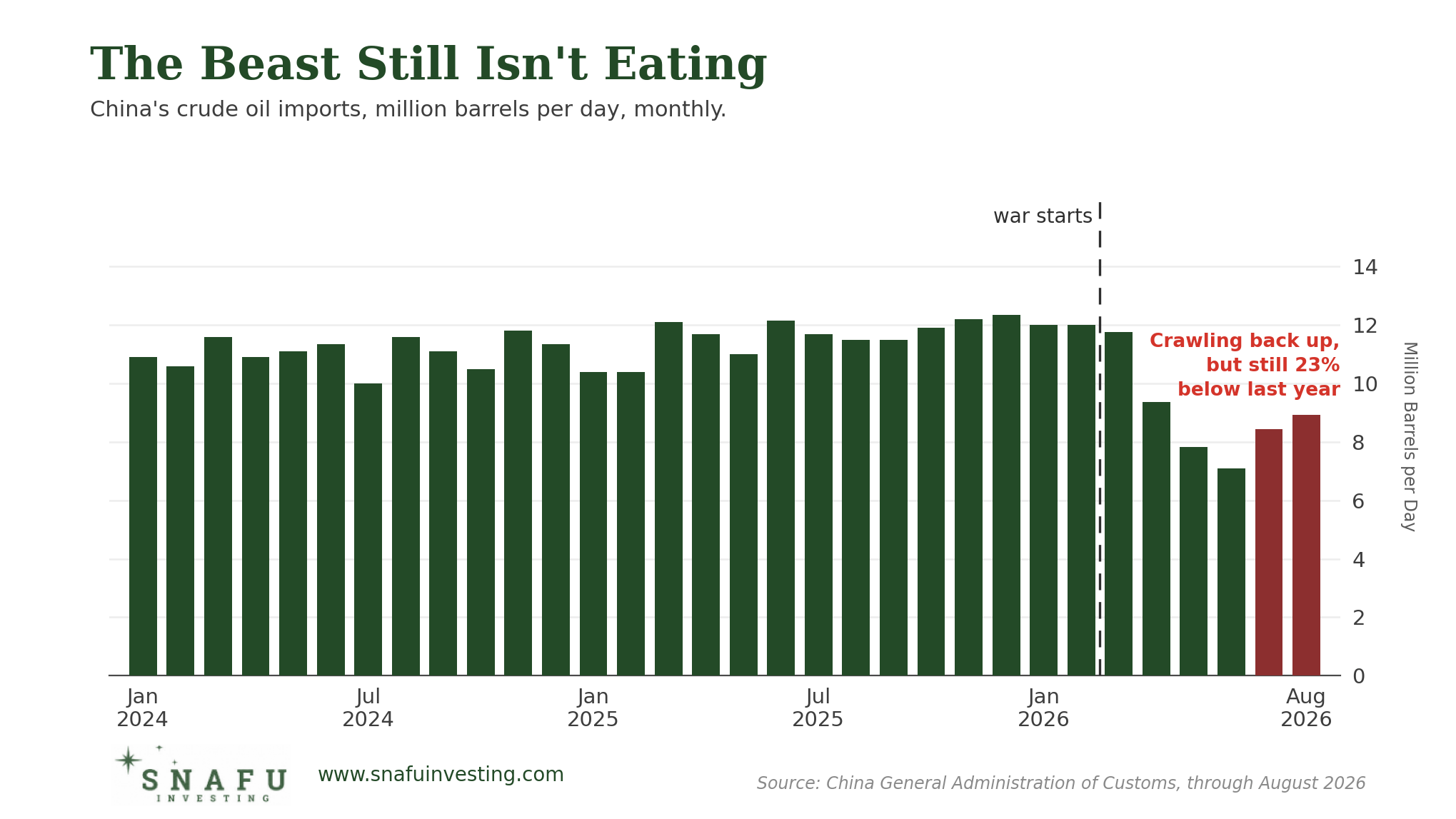
As you can see from the chart above, August came in at 8.93 million barrels a day. That’s up from 8.45 in July, and a good deal better than the June low of 7.1. So yes, they’re buying again.
But that’s still 23% below where imports were a year ago.
Bottom line, nearly seven months after Hormuz shut, the world’s biggest oil buyer is still taking in a quarter less crude than it normally would.
And here’s the part I find most interesting.
Low imports could also conceivably mean China’s economy is struggling and doesn’t need as much oil. That is not what’s happening.
Chinese refineries processed 13.91 million barrels a day in August. That’s the most since March, by the way. Imports plus domestic production came to 13.27 million barrels a day. Which means the difference, about 640,000 barrels a day, came out of storage.
Put differently: China is using the oil. It just isn’t buying as much of it as it normally would. And if you read those two pieces above, you already know why.
Which makes you wonder how much longer they’re prepared to keep doing that, and what happens to the price if they stop while this war is still going.
That question isn’t academic, and it brings us directly to what happened last week.
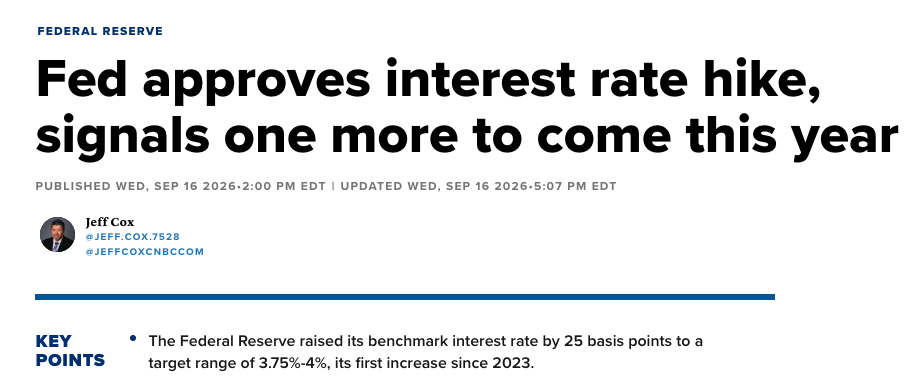
On Wednesday the Fed raised rates a quarter point, its first hike since 2023. It did it because of energy prices.
But there’s one problem.
The Fed can set the price of money. It can’t produce a barrel of oil or reopen a strait.
So what you’re really looking at is the world’s largest central bank reaching for the wrong medicine, hiking into an oil shock with a $40 trillion debt load on its back.
I got into all of that in an alert I sent subscribers on Saturday. What the hike means for our gold and silver positions, and why I think this is the Fed proving a point rather than the start of another Volcker. It’s linked below, along with the other piece from last week.
Alert: What the Fed’s Hike Means for Our Portfolio

As I wrote earlier this week, the Fed went ahead and raised rates by a quarter point, its first hike since 2023.
Trump Is Threatening to Blow Up Global Trade

If you want to understand just how serious America’s $40 trillion debt problem has become, consider what President Trump threatened to do earlier this month.
From the Comments
One of the things I’ve come to appreciate most about writing here is the conversation that happens in the comments. Here are four that stood out last week, for different reasons. Each one links back to the piece it appeared on, so you can click through if you’re interested in the context.


Thanks again to everyone who left a comment last week. I read all of them, even the ones I don’t get a chance to reply to individually. Over the coming days, I’ll try to catch up on the questions and the longer threads.
Regards,
Lau Vegys
P.S. If you're a paid subscriber, keep an eye out for the September issue before the month is out. It will feature a new pick, complete with the full thesis, the buy-up-to price and the tranche levels. And if you're not, this might be the issue to come in on.