


You may not have noticed it amid the ongoing Iran war and everything else going on right now, but the U.S. just smashed through another historic fiscal milestone: $40 trillion in national debt.
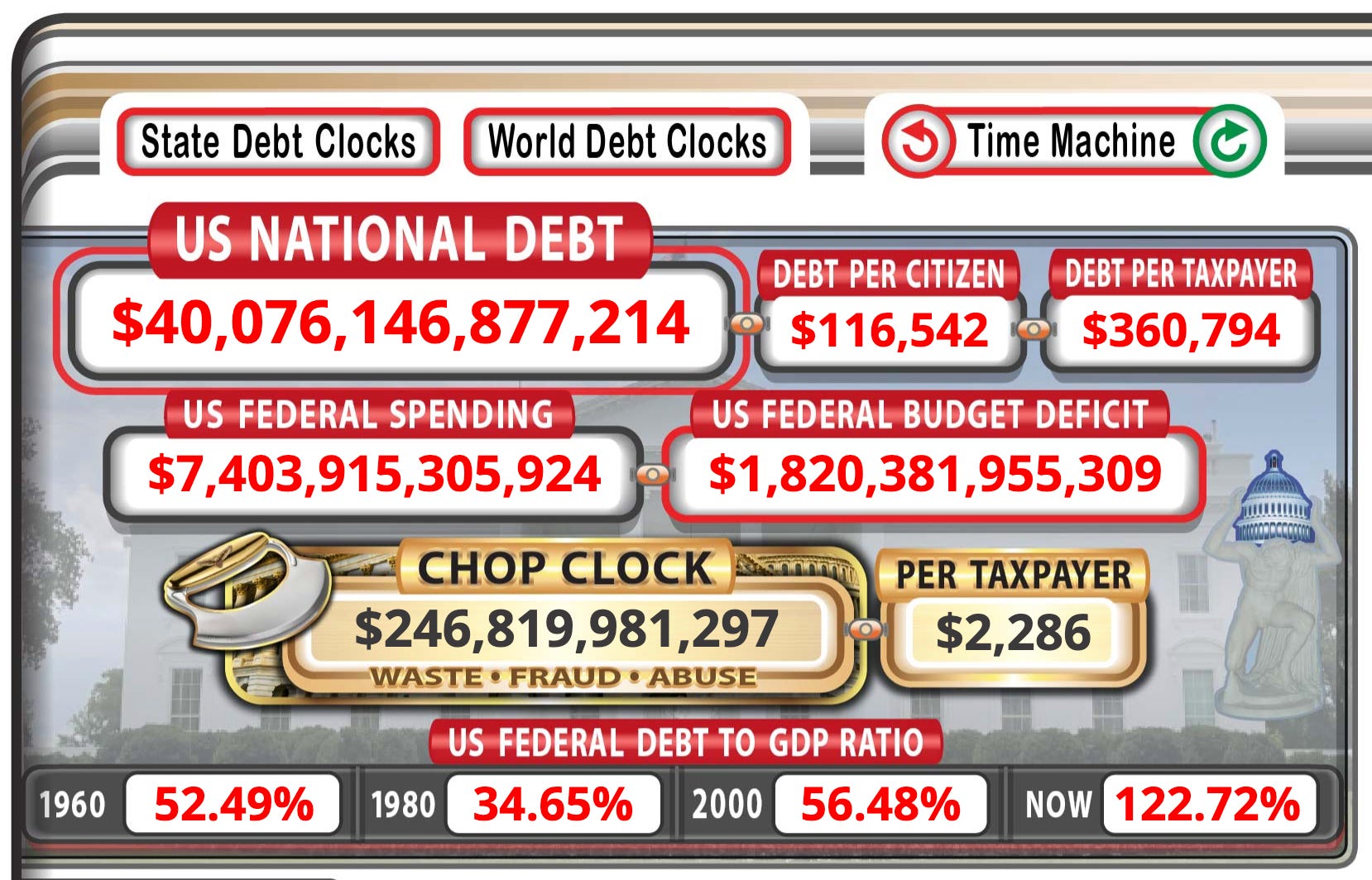
That’s roughly $361,000 for every U.S. taxpayer and about $117,000 for every American citizen.
Back in the spring I wrote that on the then-current trajectory, $40 trillion would arrive before the end of fiscal year 2026, September 30 at the latest. It came six weeks sooner than that.
That was already the third time I’d been too conservative about this number inside a year.
And that’s the thing. The headline number is bad enough. But what should really worry you is how quickly it keeps getting worse.
In January 2024, for instance, the national debt stood at $34 trillion. By August 2025, it crossed $37 trillion. By late October, $38 trillion. In March of this year, $39 trillion. And now, five months later, $40 trillion.
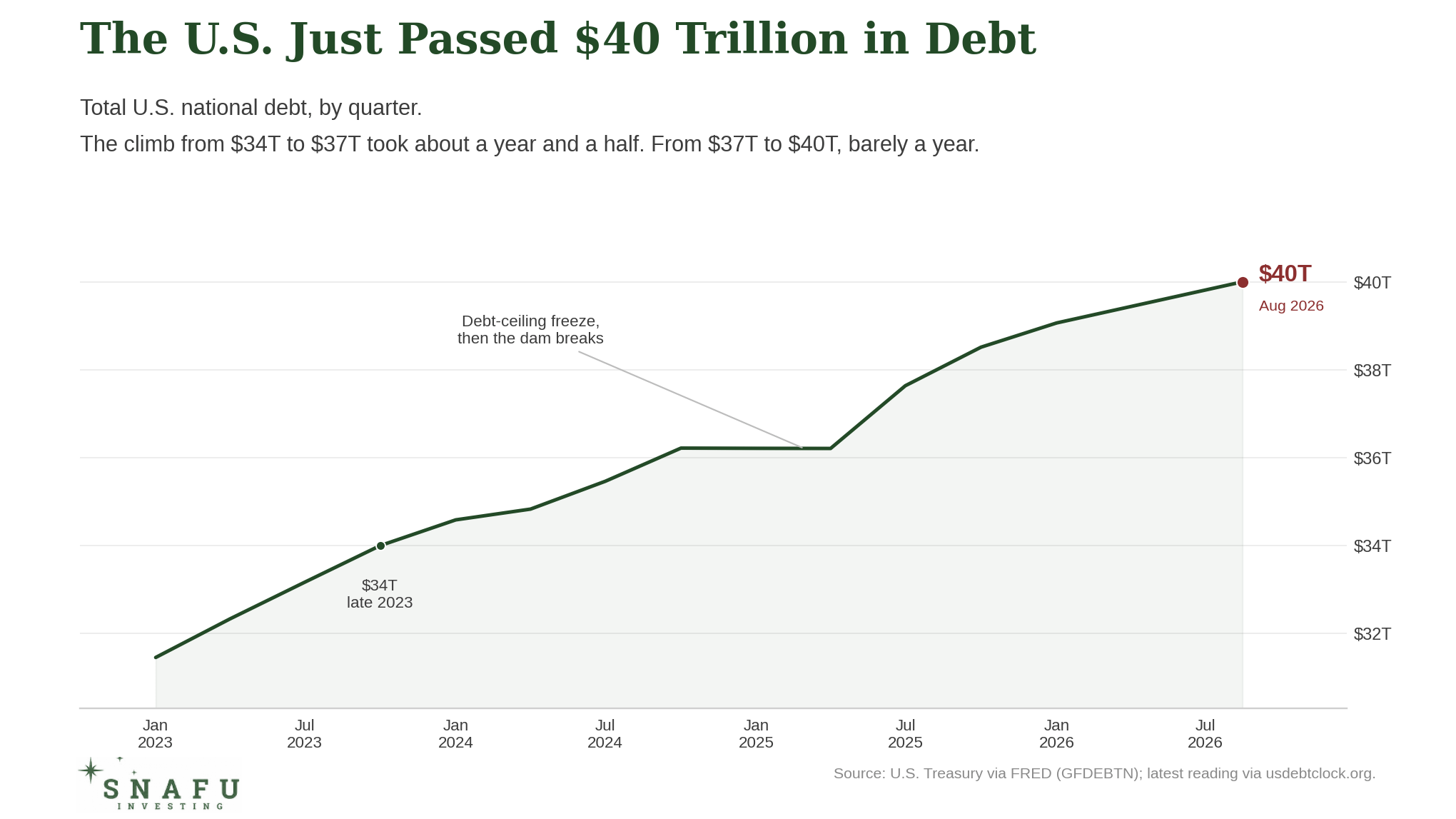
Over the past year, the government has been adding debt at a rate of roughly $8.2 billion every single day. That’s nearly $6 million every minute. You can step into the bathroom, and by the time you walk out, the U.S. will be another $28 million deeper in the hole.
And from the looks of things, it’s only going to get worse from here. As I wrote to you a little over a week ago, the Treasury recently announced that it expects to borrow another $739 billion between July and September. That’s in a single quarter.
And that figure was nearly $70 billion higher than what the same department had projected back in May.
Remember, this is all happening at a moment when there’s no pandemic, no financial crisis, no single emergency on the scale of those that historically produced enormous spikes in U.S. debt. Yes, there’s the Iran war, but nothing remotely comparable in fiscal scale to the Civil War, World War II, 2008 or the pandemic.
The point I’m making is that this time, the crisis isn’t a moment. It’s the system itself.
Which is quite something when you remember that before returning to the White House, Trump promised to pay off the national debt. Not reduce it. Not stabilize it. Pay it off.
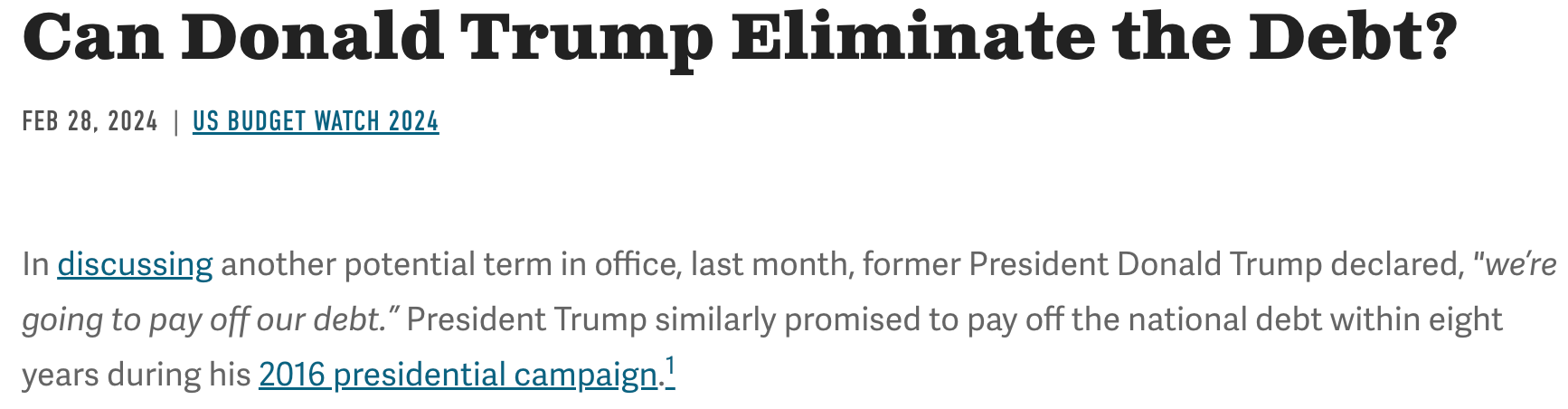
To the surprise of no one, that of course didn’t happen. Instead, the debt has climbed by trillions and has now more than doubled from where it stood when he first took office in 2017. (Mind you, that’s not Trump-bashing. It’s simply a fact that I hope even the administration’s most hardened partisans can acknowledge.)
All of which brings us to the obvious question that rarely seems to get asked when one of these milestones goes by.
So Who’s Lending?
Somebody has to lend the U.S. government the money. That forty trillion dollar mountain didn’t materialize out of nothing. Every dollar of it is owed to someone who handed it over and expects it back.
Some of it is Americans, of course. But for much of the past half-century the answer was, to a remarkable degree, foreigners. They ran trade surpluses, ended up holding dollars, and parked those dollars in U.S. Treasury bonds. It was the obvious thing to do. Treasuries paid interest, they could be sold in seconds, and they were backed by the wealthiest country on Earth.
As I write this, going by the government’s own numbers, foreign holders own about 30% of marketable Treasury debt. That sounds respectable enough until you realize it’s the lowest share in roughly two decades. Back around 2010–2011, they owned close to half. You can see the decline in the chart below.
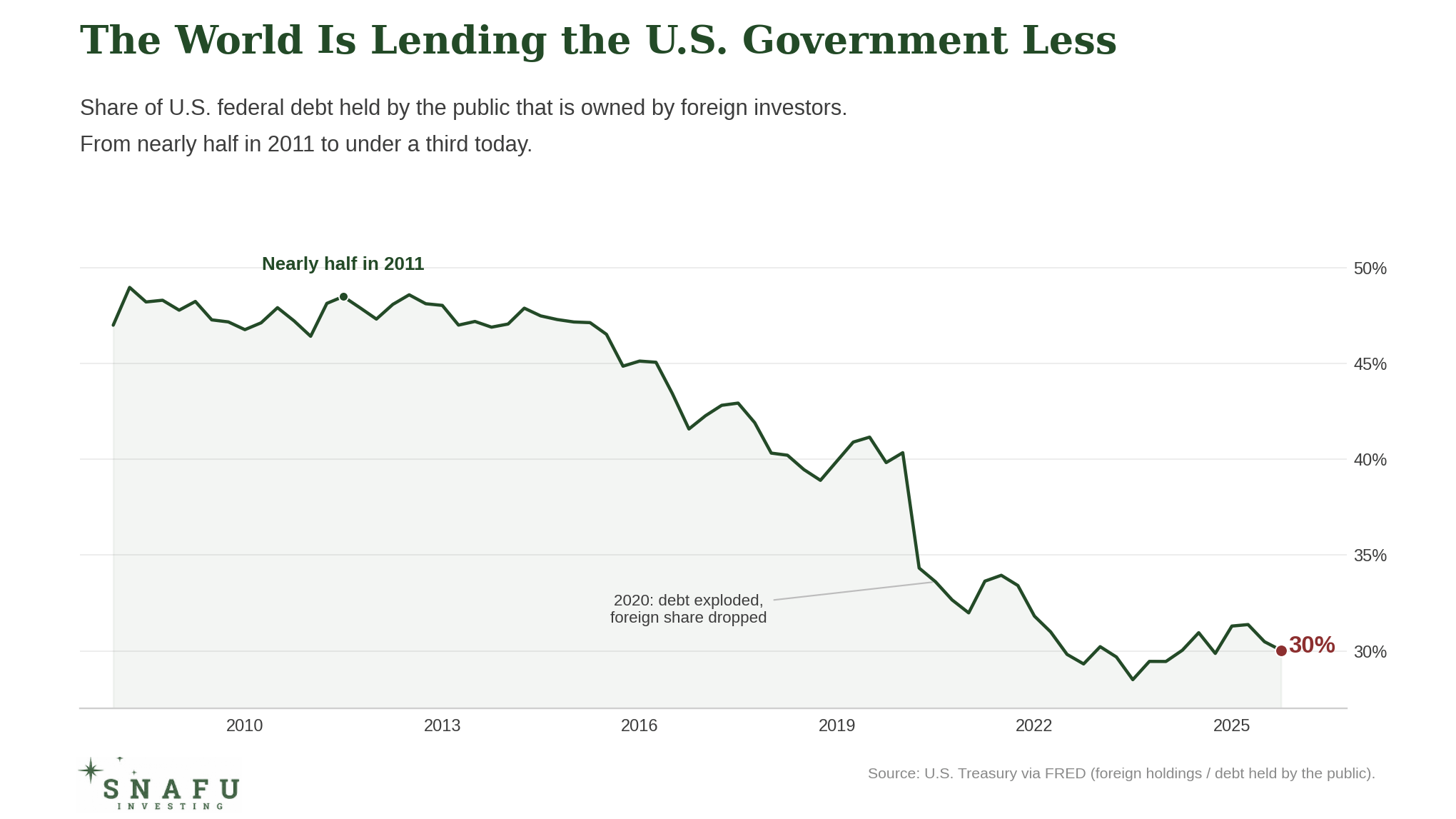
But you don’t need a fifteen-year chart to see where this is going. The last few months will do.
Last week, for instance, the Treasury Department published its capital flow figures for June. Foreign investors bought a net $6.8 billion of longer-term Treasury bonds and notes. In May, that figure had been $56.6 billion. At the same time, they cut their holdings of short-term Treasury bills by another $29 billion.
Put the two together and foreigners were actually net sellers of U.S. government debt in June, to the tune of about $22.2 billion.
And you can understand the hesitation. You may have seen the chart I posted recently showing that, nine months into fiscal 2026, servicing the debt now costs more than Medicare and more than the entire U.S. military.
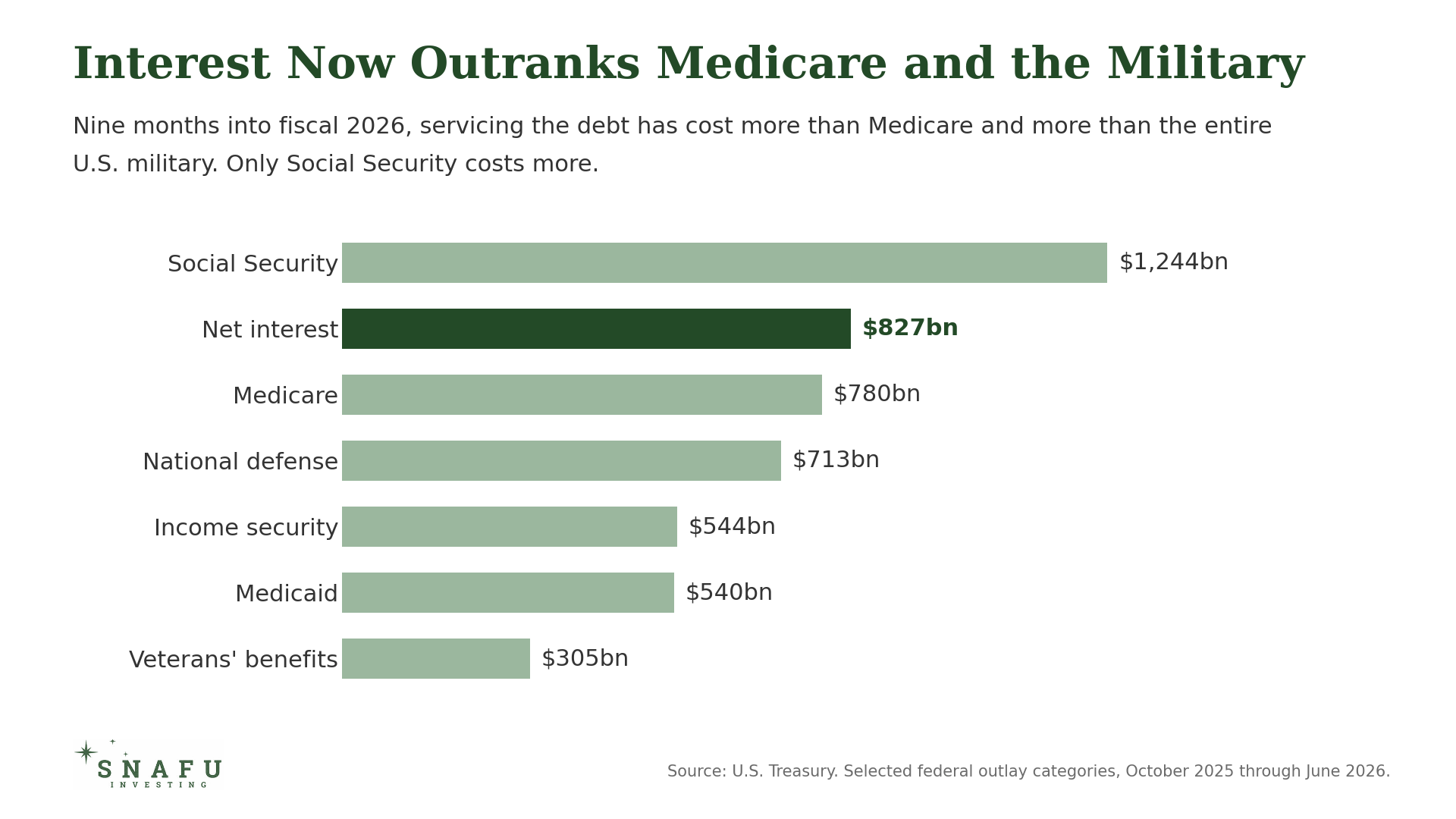
It’s crazy when you think about it. The second-largest item in the entire federal budget is now interest on money the government has already spent. So it isn’t hard to see why the same foreign buyers who spent decades falling over each other to lend the U.S. government their money are starting to get cold feet.
Meanwhile, the government has close to $10 trillion of maturing debt to roll over this year. And it has to do that in a market where the 30-year Treasury yield has climbed to around 5.2%, from about 4.6% before the Iran war.
Keep in mind, every tick higher makes that refinancing more expensive.
And that’s the circle the government can’t get out of. Lenders demand a higher rate because they worry they’ll be repaid in dollars worth less than the ones they lent. The higher rate swells the interest bill. The bigger interest bill means more borrowing. And the more the government borrows, the more lenders demand to keep lending. Each turn makes the next one worse.
So how does the U.S. government get out of this quagmire?
Well, an outright default would be political suicide for those at the top. Which leaves one realistic option: inflating the debt away.
That means devaluing the dollar. Not in one dramatic announcement anyone could be blamed for, but year after year, on a scale that could make the post-2008 money-printing era look like a warm-up.
Situation normal. Position accordingly.
Regards,
Lau Vegys
P.S. So how do you position for a government quietly inflating its debt away? The oldest answer still works: turn as much paper currency as you can into real money. Gold. This month’s SNAFU Investing issue, out later this week, adds a brand-new gold recommendation to the SNAFU portfolio, built on exactly that thesis, along with a look at why the world’s central banks are lining up to buy even more gold just as it’s becoming clear there isn’t enough physical metal to go around. Keep an eye on your inbox.
Thank you, Sir.
Your response is another example of the excellent service you provide.
DFH MD
I consider your prose and general analysis amongst the best I have encountered.
I am not interested in equity recommendations as I am satisfied with my production and approach for the past 40+ years.
Which leads me to ask if you have considered a limited approach subscription to your output.
Thank you for reading this.
DFH