

Lau here.
Today’s Monday note is not going to be terribly long, because I just came off about a week of working on the latest monthly issue of SNAFU Investing, which went out yesterday.
It’s amazing what several days of poring over news, research reports and financial statements can do to your recovery needs.
Anyway, one of the things I spent a good amount of time on in the issue was something Xi Jinping said during his state visit to Washington last week, standing on the South Lawn of the White House with Trump beside him:
China and the United States must hold the line of no conflict and no confrontation between us. The Thucydides Trap can be overcome.
Like I said in the issue, a lot of the coverage took that as a message of peace from Xi.
And sure, it can be read that way. But it can also be read as a challenge. Because to accept the framework at all, you have to accept that there is a rising power and an established one, and you have to be pretty clear about which is which. And I don’t imagine Xi was thinking of himself as the established power being overtaken, standing there on the South Lawn.
You can read about all that in the issue (linked below), but one thing I didn’t mention is that Thucydides, the Greek historian the trap is named after, who wrote the history of the war between Athens, the rising power of the day, and Sparta, the established one, wasn’t some scholar sitting in a library.
He was an Athenian general. In 424 BC, they sent him to hold a city called Amphipolis, one Athens couldn’t afford to lose, and he turned up too late. So they exiled him for twenty years, which he used to travel, including through enemy territory, writing down what both sides had to say about the war.
Now, interestingly, the man who first diagnosed the trap never got to write the ending. His account breaks off mid-sentence, seven years before the war actually finished. Another Greek historian, Xenophon, picked up the story where Thucydides stops and carried it forward.
In case you’re foggy on how the war ended, Sparta, the established power (think the U.S. today), won. Athens, the rising power (think China today), lost.
Yes, the established power beat the rising one. Remember, the Thucydides Trap tells us nothing about which side, rising or established, might win. It just tells us that war between the two is pretty much inevitable.
But here’s the thing. Sparta only pulled it off by taking Persian money (Persia being the other great power in the neighborhood, and the ancestor of today’s Iran) and Persian timber to build a fleet of two hundred ships. Which is another way of saying it invited the outside power into a Greek quarrel so it could win the quarrel.
This, of course, didn’t end well. Sparta won the war, but it had bled down a citizen army it could never really replace, and Persia eventually switched sides and began financing Sparta’s enemies instead. Then, in 371 BC, thirty-three years after the war ended, an army from the Greek city-state of Thebes smashed the Spartans at Leuctra. Sparta never really recovered.
My point is that when all was said and done, both sides lost. And historically, you see the same dynamic come around again and again whenever these situations arise. Sometimes the established power wins, sometimes the rising one does, but the war tends to be so taxing that even the winner rarely comes out whole.
Make of that what you will.
And on a final note…
Xi’s reference to the Thucydides Trap brought to mind an old Soviet joke I wanted to share with you today. I think you’ll agree it’s a fitting one given the outcome of last week’s meeting.
As the story goes, Leonid Brezhnev, the Soviet leader at the time, told a version of it to Henry Kissinger in May 1973, at the Politburo villa at Zavidovo outside Moscow, while the two of them were working out the details of Brezhnev’s state visit to Washington (the one that produced an agreement aimed at preventing nuclear war).
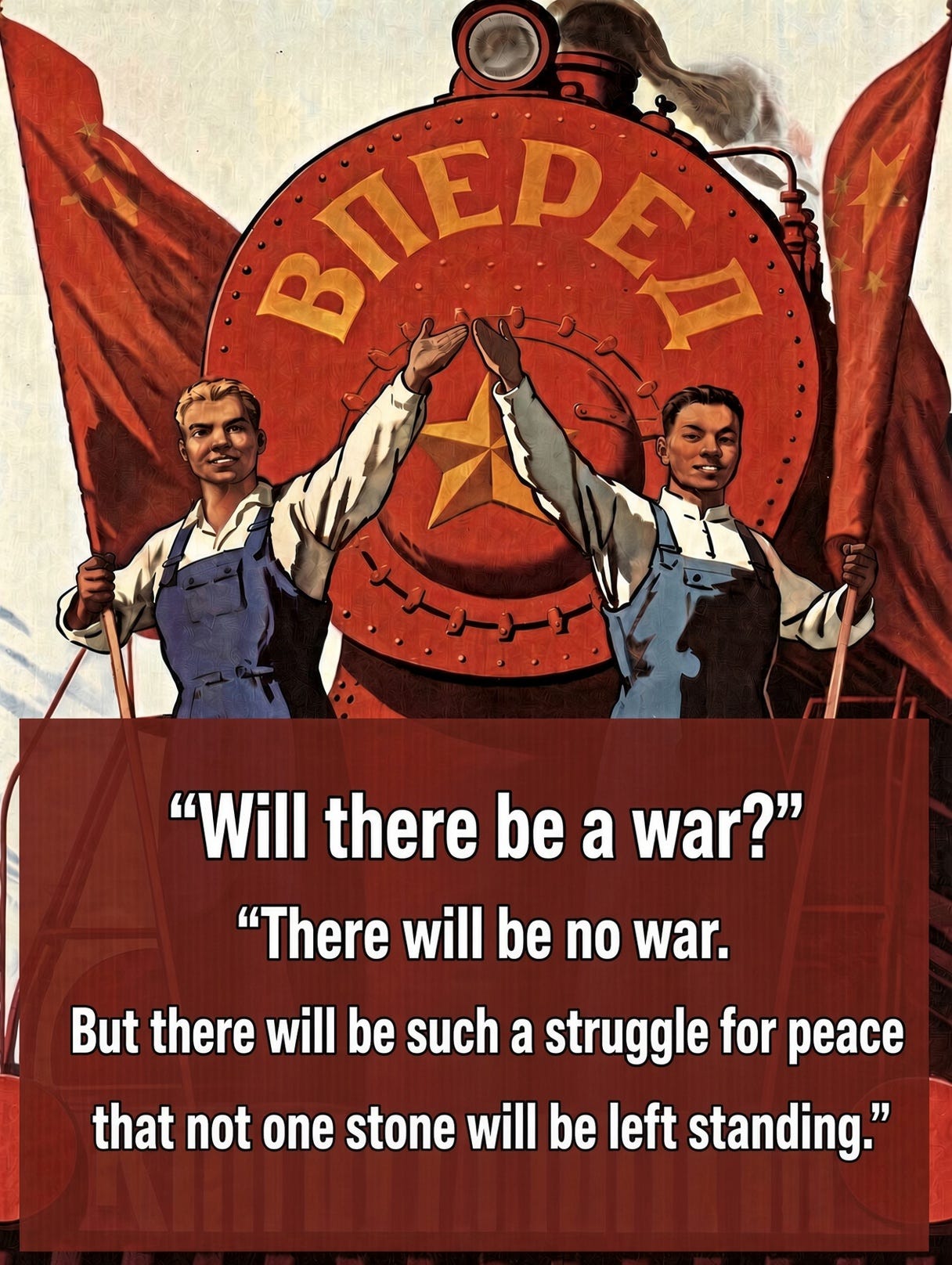
The irony is that this particular joke ended up being prophetic. The warmer U.S.-Soviet relationship of the early 1970s unraveled over the rest of the decade. The decisive break came with the Soviet invasion of Afghanistan in December 1979. Carter imposed sanctions and a grain embargo, restricted technology exports, pulled the arms control treaty he had signed with Brezhnev six months earlier out of the Senate, and backed the 1980 Olympic boycott.
The struggle for peace, as promised.
September Issue: The U.S.-China Truce That Fixed Nothing, and a New Recommendation

A word before we start. This is the second of the SNAFU Investing monthly issues, which come at the end of each month. This one carries a new recommendation, below the paywall.
AI Could Kill Us All. Please Invest.

It seems like Wall Street has fallen in love with artificial intelligence all over again.
From the Comments
One of the things I’ve come to appreciate most about writing here is the conversation that happens in the comments. Here are five that stood out last week, for different reasons. Each one links back to the piece it appeared on, so you can click through if you’re interested in the context.


Thanks again to everyone who left a comment last week. I read all of them, even the ones I don’t get a chance to reply to individually. Over the coming days, I’ll try to catch up on the questions and the longer threads.
Regards,
Lau Vegys