


Last month, ICBC, the Industrial and Commercial Bank of China and the largest bank in the world by assets, suspended retail leveraged precious-metals margin trading on the Shanghai Gold Exchange (SGE).
The cutoff was July 24. Clients were told to close their positions, sell their holdings, or take physical delivery. After that, access through mobile banking, online platforms, and branches went dark.
ICBC was not acting alone. Postal Savings Bank of China, Ping An Bank, China Guangfa Bank, and China Construction Bank all brought in similar measures in the weeks leading up to the deadline.
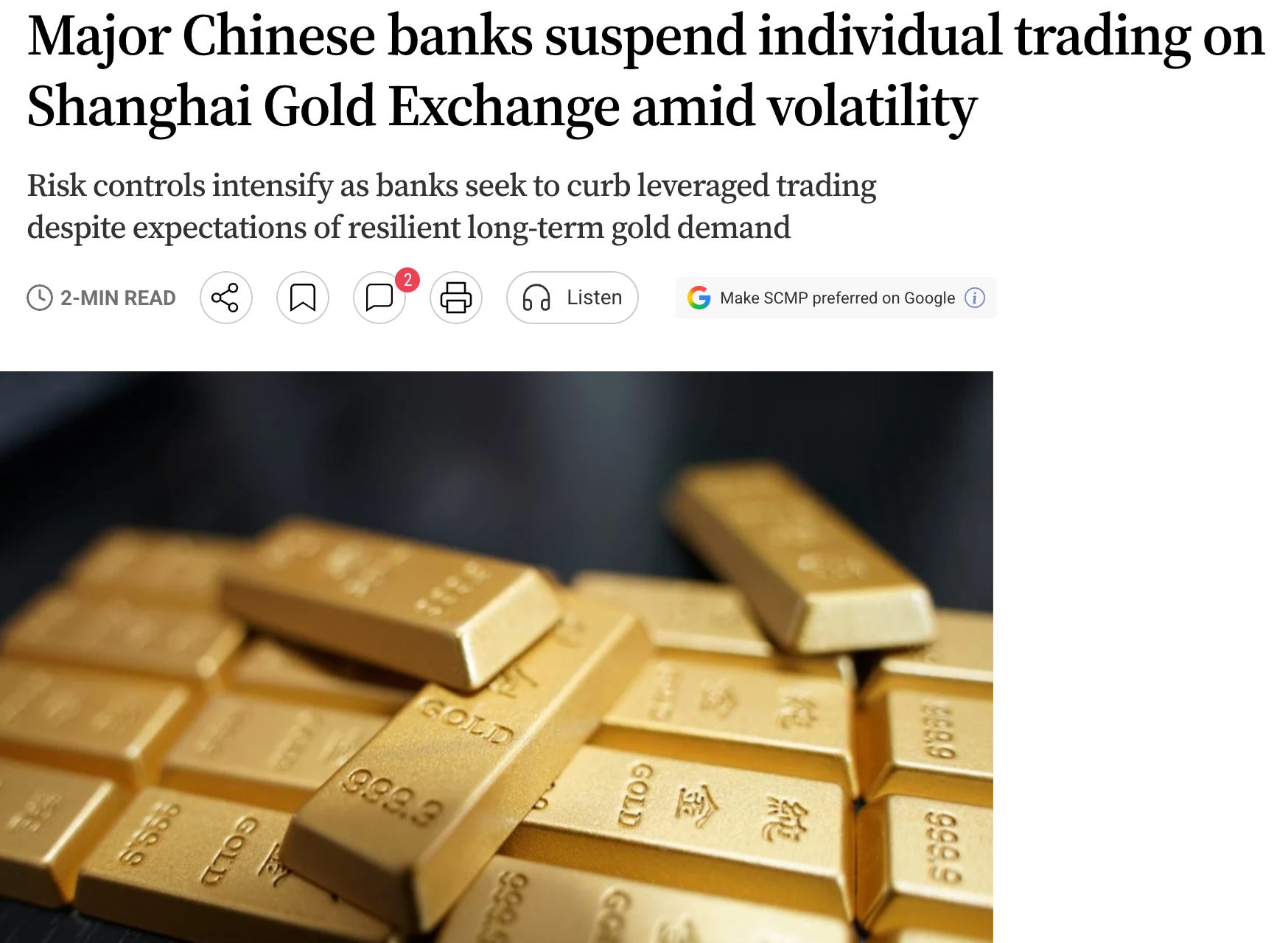
These banks stopped opening new accounts, closed dormant ones, refunded idle margin, and raised the cost of staying in. On some products, margin requirements were lifted as high as 140%.
The banks say they are shielding retail investors from volatility. And if you’ve been watching the precious metals markets this year, that certainly rings true — there has been plenty of it. Gold pushed past $5,500 earlier this year before falling nearly 30%. Silver's ride was wilder still. As the chart below shows, it ran to $121 in January before collapsing all the way to the high 50s.
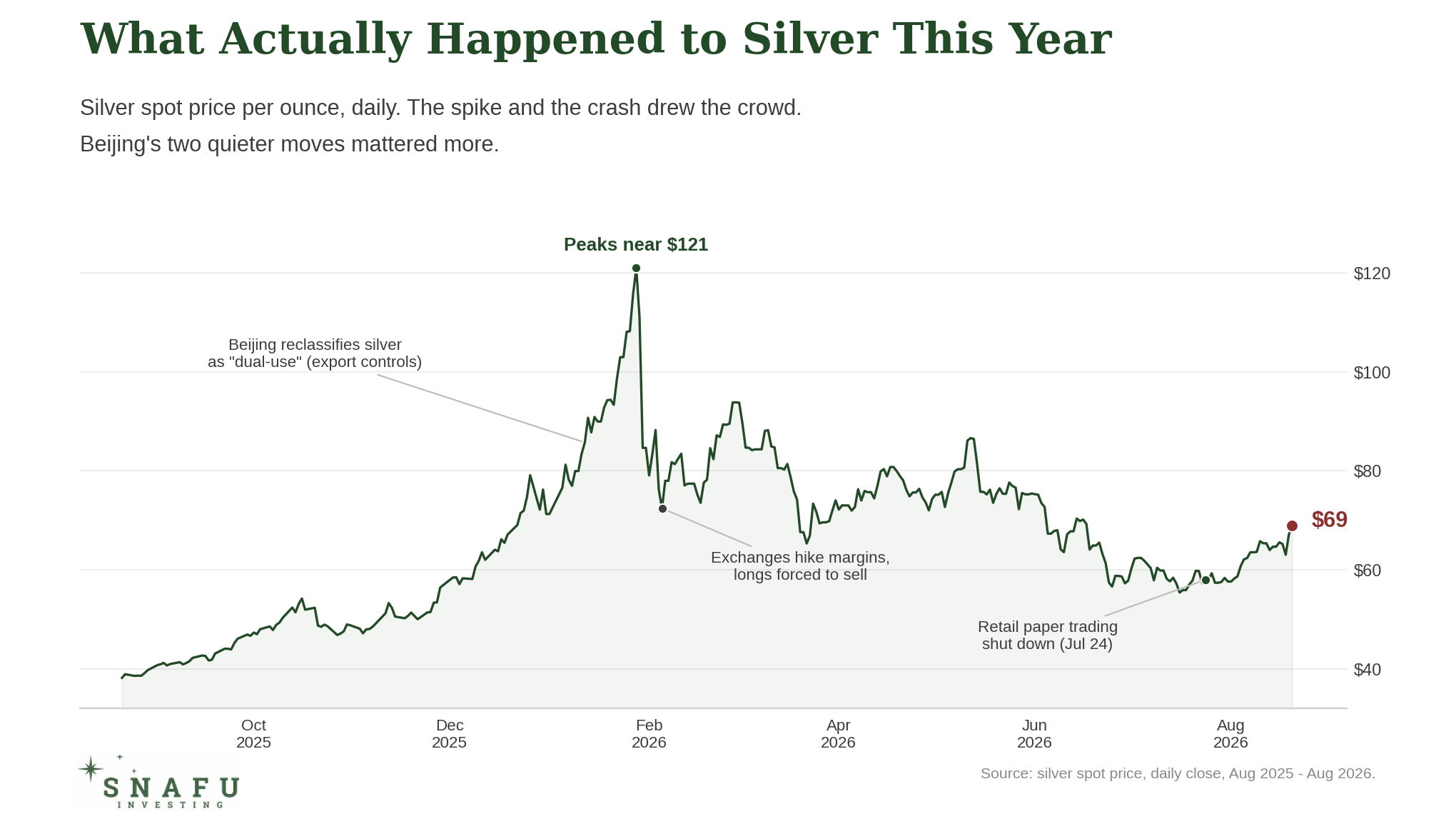
While the run to $121 owed a lot to something China had quietly done earlier in the year (more on that below), the plunge that followed was mostly the work of margin hikes by the Chicago Mercantile Exchange (CME), which forced leveraged longs to sell in the paper market.
Not a Temporary Fix
You can sort of understand why Chinese banks are using volatility as the explanation here. Everyone still remembers 2020, when Bank of China’s “Crude Oil Treasure” imploded amid the chaos of the Covid crash, which sent oil futures negative and left retail investors owing money they never expected to lose.
But here is the thing. This is not a temporary suspension.
Chinese banks have been steadily dismantling the retail paper-trading infrastructure since 2020. New retail accounts tied to the SGE were paused that year. By December 2025, banks were closing dormant accounts and returning unused margin. July 24 was the final cutoff.
So now that the paper layer is gone, what is left?
Physical pricing, of course. And this part is worth understanding, because the Shanghai Gold Exchange does not work like the exchanges we are used to in the West. On COMEX, the vast majority of contracts are settled in cash. Traders buy and sell paper claims on metal that most of them never intend to touch. In practice, only a tiny fraction of contracts, well under 1%, ever end in someone actually taking delivery. The paper market, in other words, dwarfs the pile of real metal sitting underneath it.
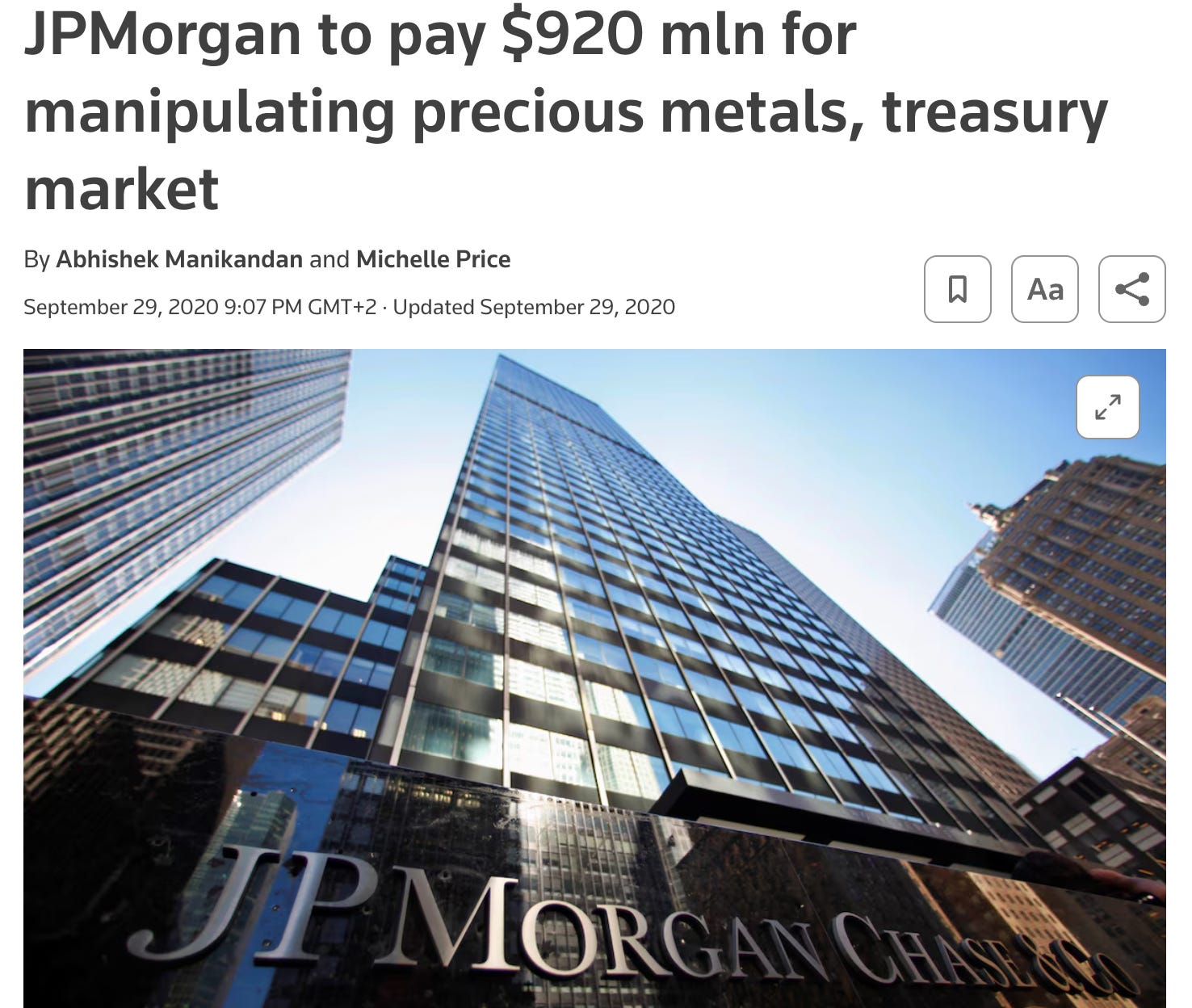
The trouble is, a market structured this way also leaves plenty of room for manipulation. And this isn’t just conspiracy talk. In 2020, for instance, JPMorgan paid a record $920 million over exactly that: years of its traders spoofing the metals market with orders they never intended to fill.
Meanwhile, on the Shanghai exchange, physical metal leaves the vaults by the thousands of metric tons each year. In other words, when a contract settles there, actual metal changes hands. And that physical link has been baked into the exchange since it opened in 2002.
The point is, China is doing this the right way.
Just think about what happens when you strip away the speculative paper layer of an exchange. A Chinese saver who wants silver now has to go out and buy the real thing: bars, coins, or ETFs that actually hold the metal.
Clearly, China is interested in getting its own people out of paper and into something they can actually hold.
The Move Behind the Move
Of course, if you have been reading me this year, you will know this isn’t the only thing out of China that should make you bullish on silver.
Back at the start of the year, Beijing also reclassified silver under “dual-use export controls,” the category reserved for materials with both civilian and military applications. Since then, exporting silver from China has required government authorization. Only 44 companies have been approved to ship it abroad during the 2026–2027 period, which means Beijing now effectively controls how much refined silver leaves the country.
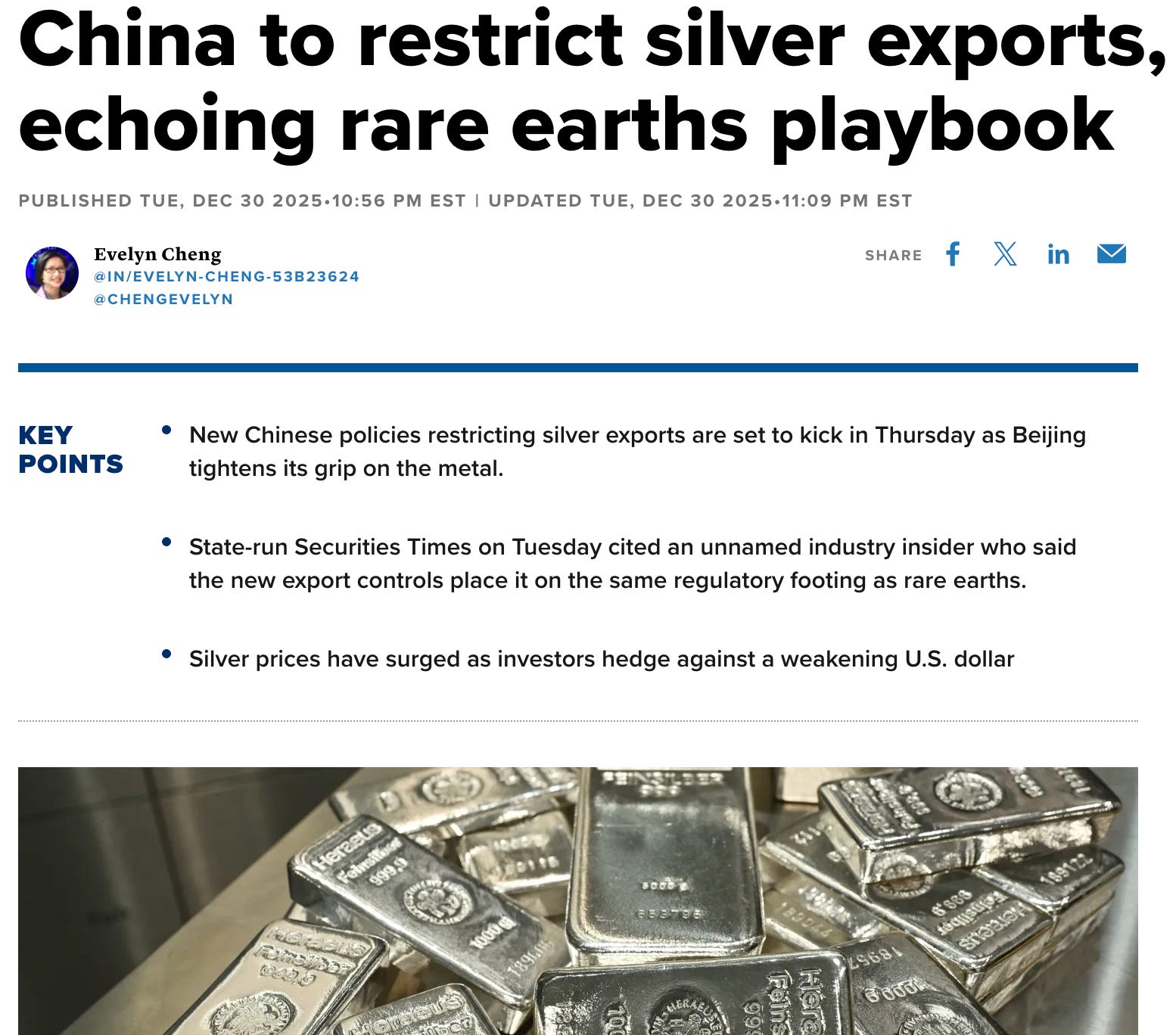
You might remember China running this exact play before. First rare earths, then tungsten, then antimony.
But having a grip on silver matters more than the others did. Rare earths, tungsten, and antimony go into a handful of specialized, high-value uses. Silver goes into almost everything we build. Solar panels. Electric vehicles. The data centers behind the AI boom. Satellites and military electronics. Medical gear. 5G. The list goes on.
And what makes silver worse is that a lot of it isn’t even Chinese to begin with. It comes out of the ground in Mexico, Peru, or Australia, but a large share still has to pass through Chinese smelters and refineries before it turns into usable metal. So Beijing doesn’t only decide what leaves China. It has a hand on metal that was never really China’s in the first place.
When you combine that with the fact that silver supply can’t respond quickly to higher prices, you have the makings of a serious squeeze. And that’s where silver is a little different. Normally, when a metal gets more expensive, miners dig up more of it and the price cools off. Silver doesn’t really work that way.
Why? Well, because roughly 70% of the world’s silver is produced as a byproduct of mining copper, lead, and zinc.
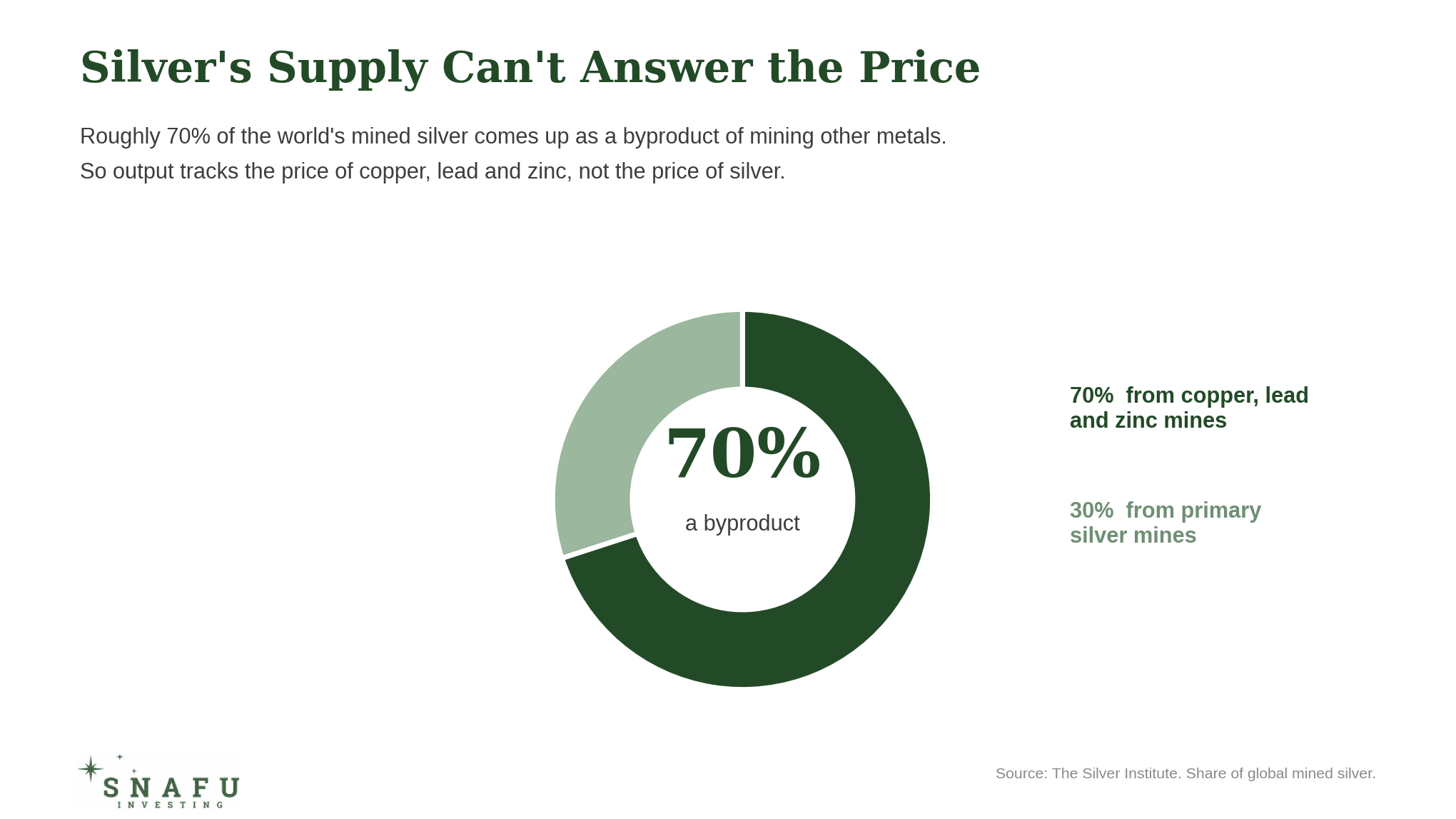
Put another way, how much silver gets produced depends largely on the economics of those other metals, not on the price of silver itself. This means the world can’t simply mine its way out of the shortage. Not at today’s prices, and not at double them either.
All this is to say the silver story looks more bullish now, not less. Yes, the CME margin hikes forced the (paper) price off its peak and back into double digits. But that’s all they did. They didn’t change industrial demand. They didn’t fill the deficit. And they certainly didn't change what China is doing to both silver supply and demand.
Have a good rest of the weekend,
Lau Vegys
P.S. This is precisely why SNAFU Investing’s second recommendation was a silver play. It’s up about 28% since I sent it to paid subscribers in July, which now puts it a little above our buy-up-to price, so for the moment it’s a buy on dips only. I also have another precious metals recommendation going out in the days ahead, so keep an eye out for it.
I've been reading about Silver and Gold and Precious Metals for a long time and sort of know my way around the investment landscape but, thank you, Lau, you've accellerated my understanding and given it more context. I appreciate that and applaud your writing skills. Today or tomorrow should be your day off with family. Go see/do something special, and let us have a glimpse of that, too, next week. All the best!
Industrial demand is catching up to a post peak supply. Physical holders will determine what price they want and theyre generally stubborn.