


I’ve been spending some time in Sicily with the missus and kids this past week. Beautiful part of the world. The food still tastes like food, the lemons still grow wild on the side of the road, and out in the countryside, people still take time with strangers — especially if you make the effort to say at least something in their language. The other day I tried to take a photo of the family in an olive grove. It wasn’t until I looked at the photos that evening that I noticed all those white things behind them in the frame.
Greenhouses.
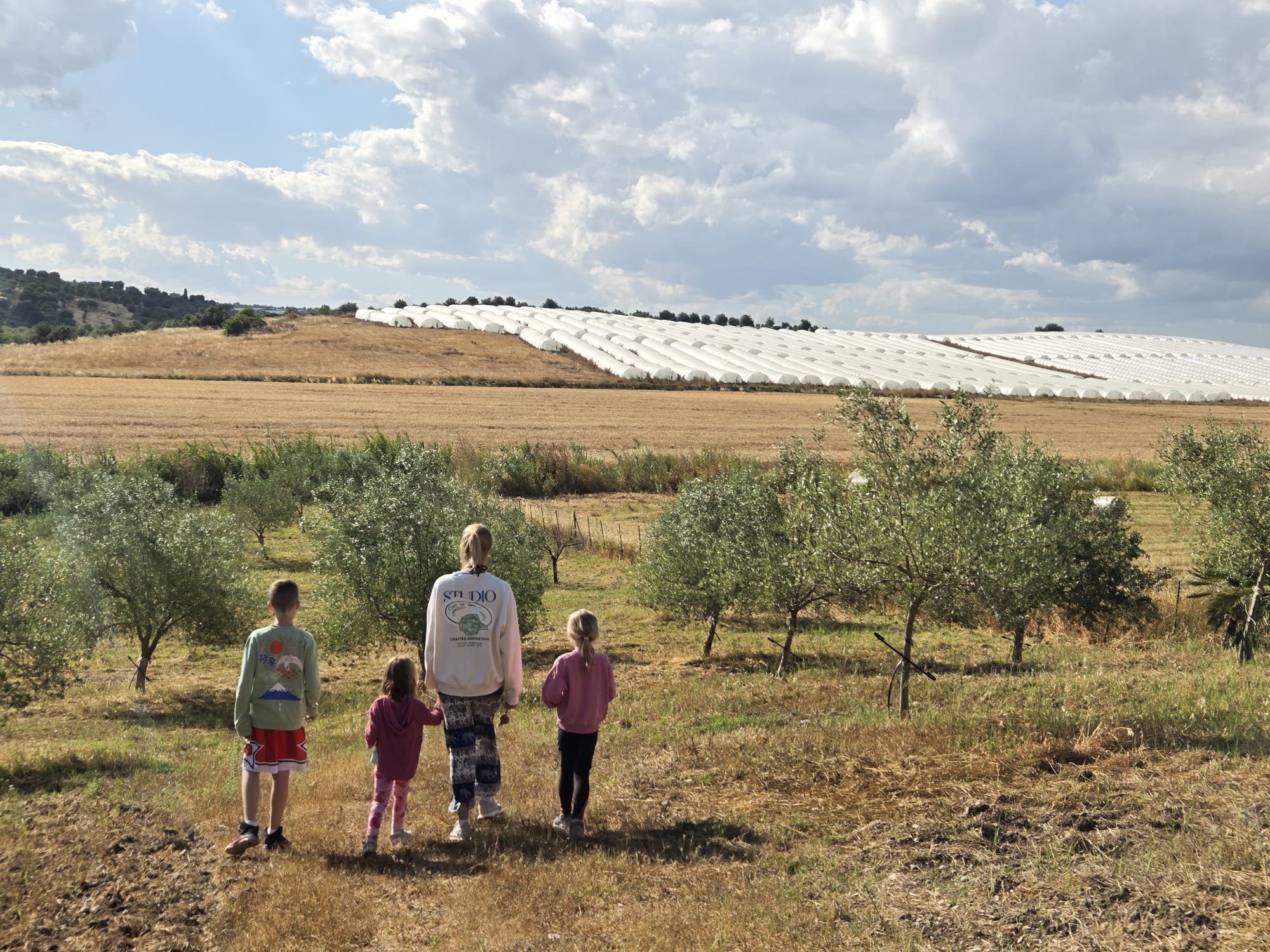
The more we drove around the Sicilian countryside, the more we found. Mile after mile of plastic tunnels, stretching to the horizon. You don’t really see them when you’re driving past — they’re just part of the landscape. But when you start looking, they’re everywhere.
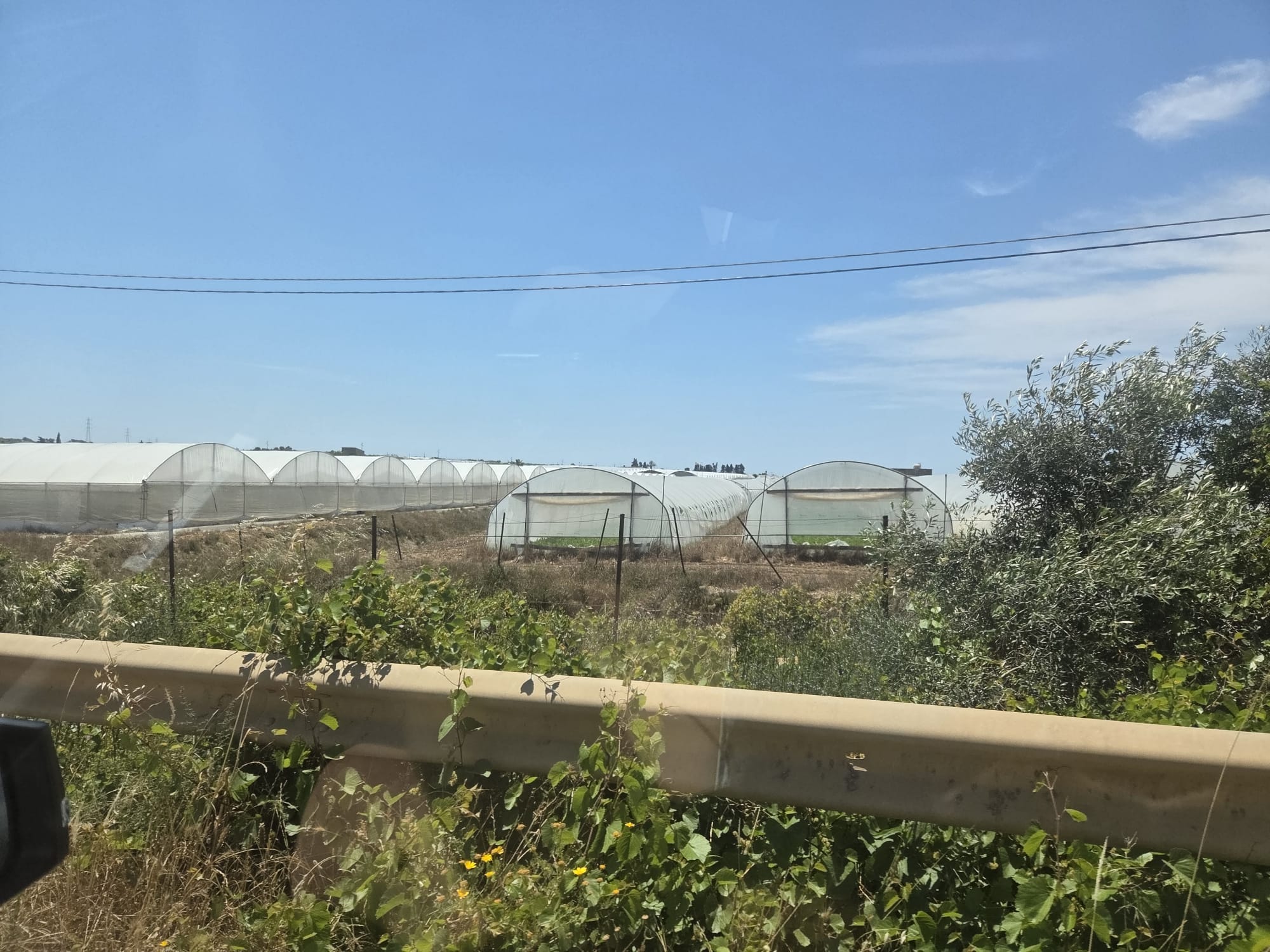
Now, you may or may not know it, but a big chunk of Europe’s winter tomatoes, peppers and salad vegetables grow under that plastic. And greenhouses, as it turns out, eat a lot of fertilizer. Specifically the nitrogen kind. Urea, ammonia. The stuff that comes out of the Persian Gulf and ships through the Strait of Hormuz.
Which, as you know by now, has been more or less closed since the U.S. and Israel hit Iran in February. About half of the world's seaborne fertilizer trade moves through that strait (see the orange bars below). For urea and nitrogen fertilizers specifically — the kind that grows the food on your plate — it's about a third.
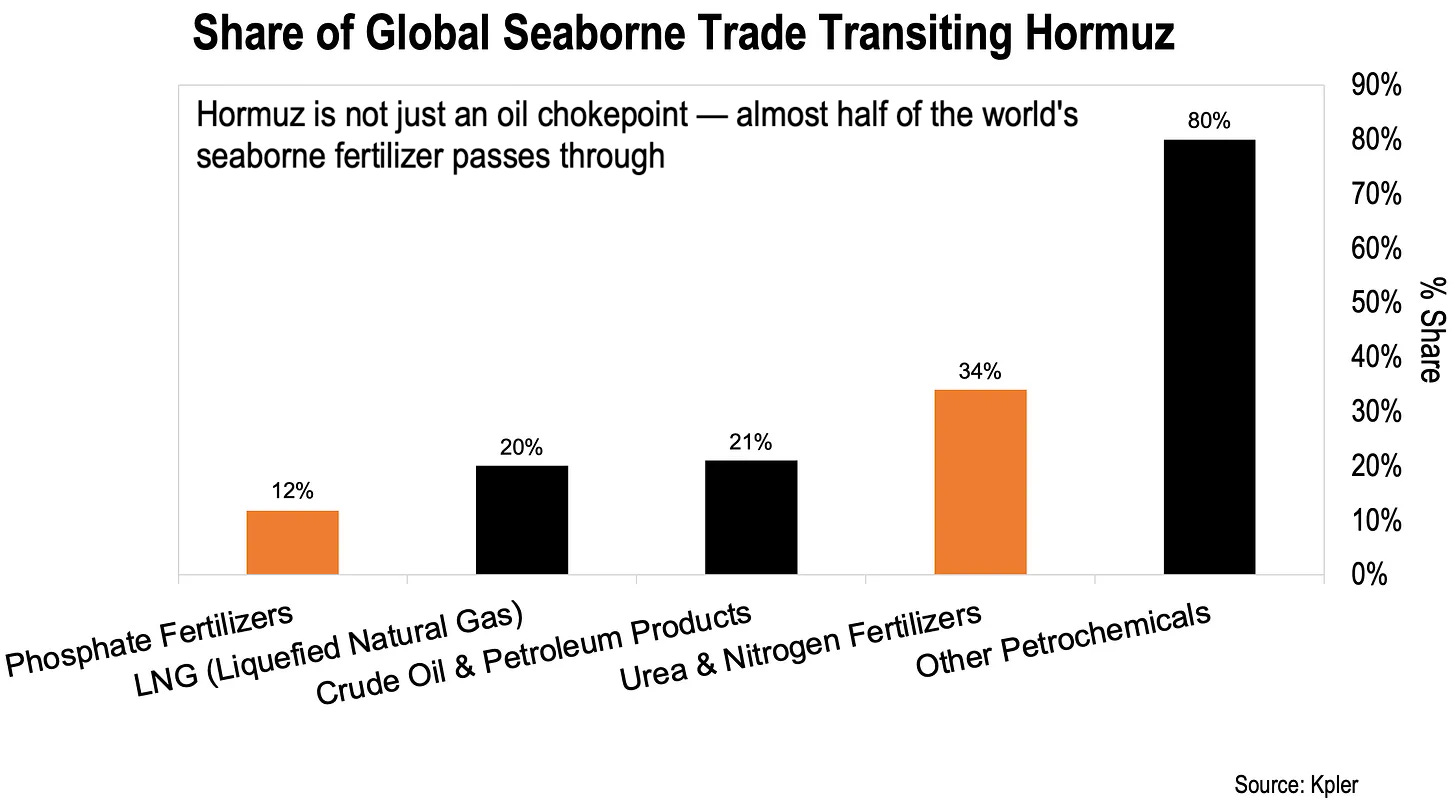
And unlike oil, there are no bypass pipelines for bulk ammonia. No strategic fertilizer reserve to tap. No shadow fleet of tankers quietly moving cargo with transponders off. When fertilizer gets stuck, it just stays stuck.
Predictably, urea prices have skyrocketed. Last month, urea at the Port of New Orleans, the U.S. benchmark, was trading above $700 per ton, up from roughly $375 in December. That’s almost a 90% jump. Here in Sicily, farmers I talked to say the fertilizer for a single hectare now costs more than the crop it grows. Meanwhile, the Mediterranean basin is staring at double-digit drops in tonnage per hectare this season.
Significantly smaller harvest, same demand. You don’t need a PhD to figure out what comes next.
You don’t need to be a farmer to see it, either. I’ve spent enough time in supermarkets here in Italy this past week to see prices that would have been unthinkable six months ago.
But here’s the thing. What’s happening here isn’t unique to Italy. Or to the Mediterranean. Or even to Europe.
Coming to a Cash Register Near You
The U.S. is in the same boat.
In fact, the war already hit the American grocery aisle. Back in March, U.S. food inflation nearly doubled in a single month — jumping from 4.2% to 7.9%. The biggest spike in years. And that was March. Two months ago. Before the full weight of the fertilizer crunch had even worked through.
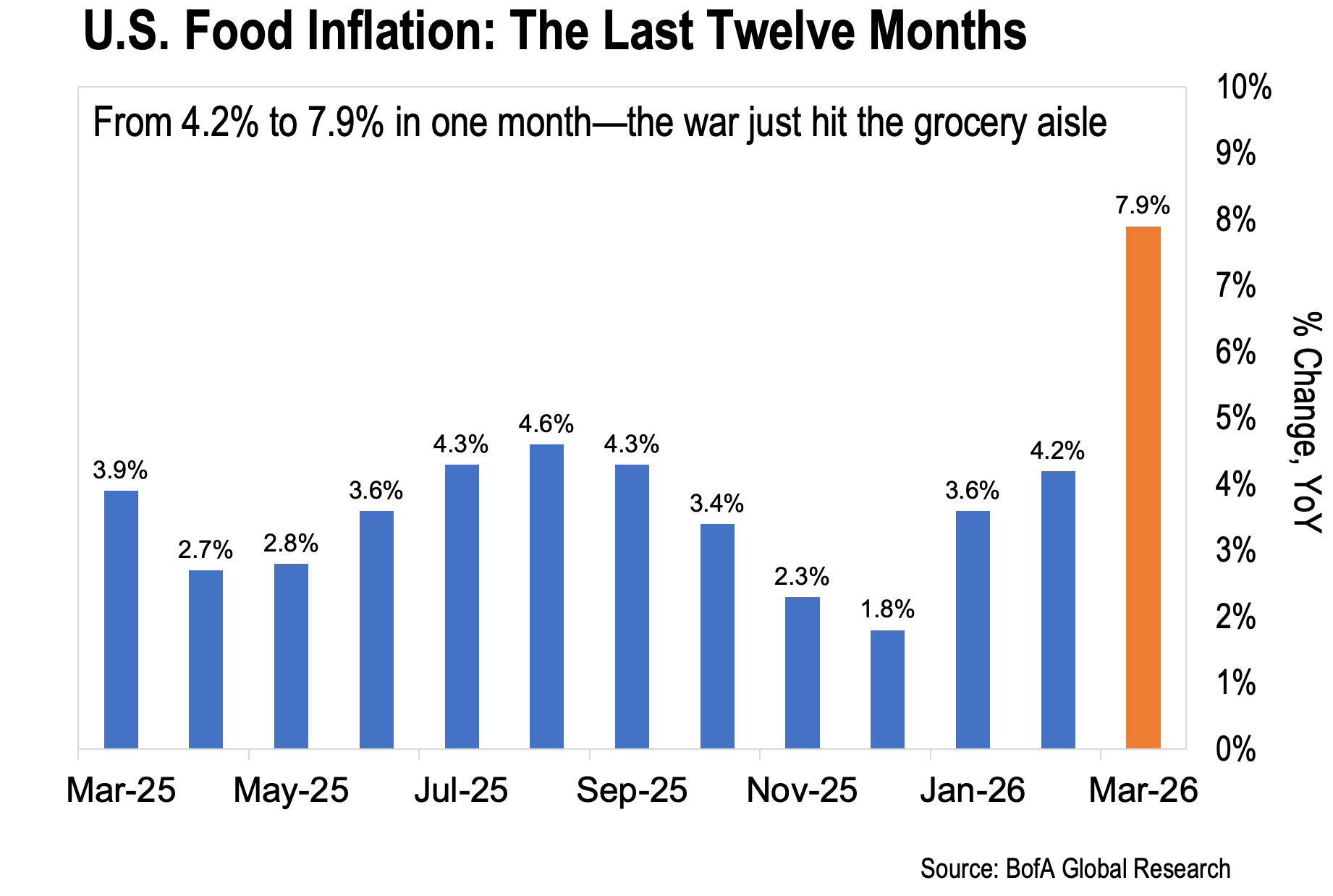
It pulled back in April as markets seesawed on every Hormuz headline. Either way, that's what shows up at the cash register today. The bigger problem is what hasn't shown up yet.
A recent CNBC report showed 70% of American farmers say they can’t afford all the fertilizer they need this spring. In the South, that number jumps to 78%. Mind you, these aren’t speculators talking. These are the people who actually grow your food.
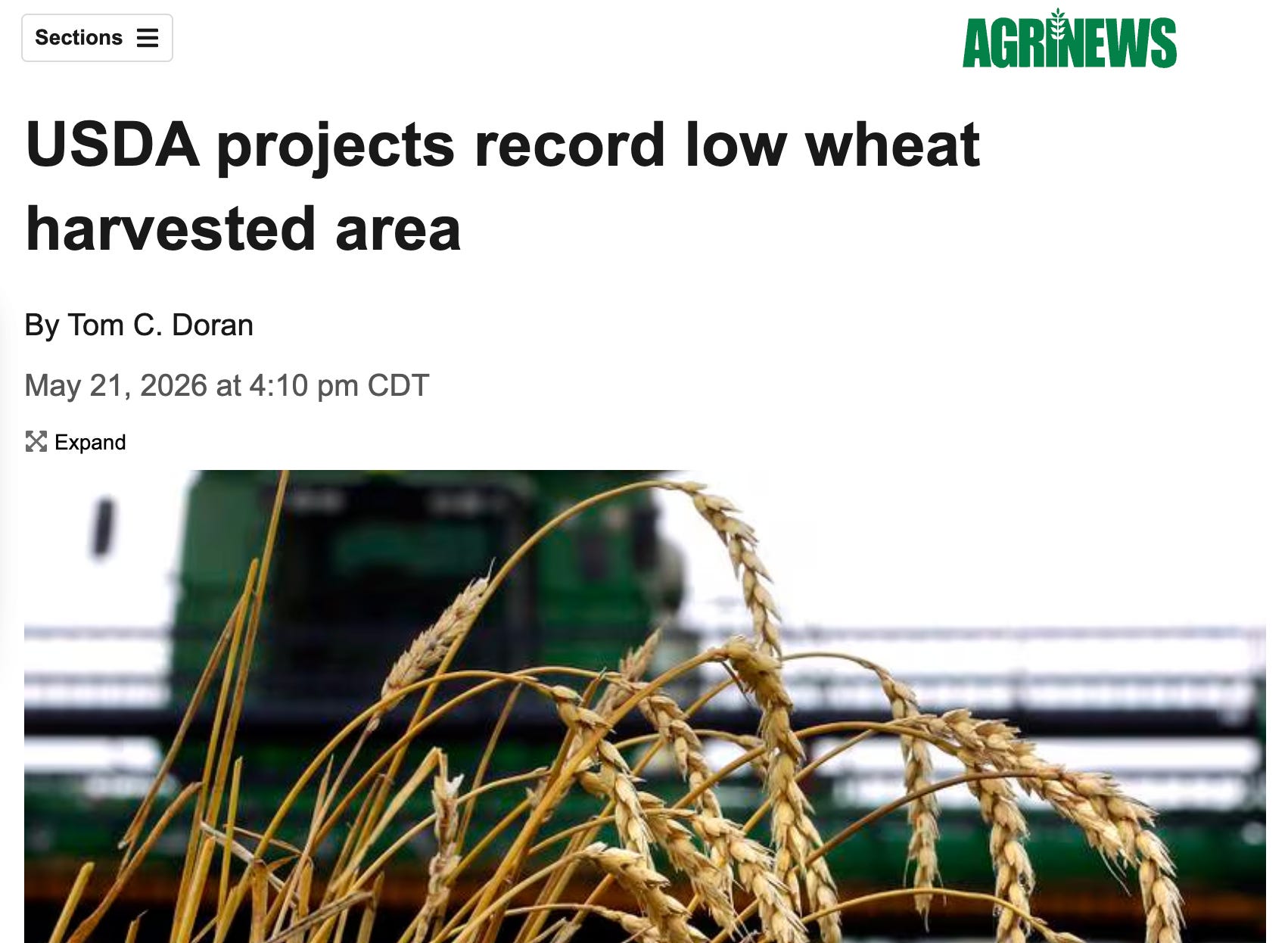
So they’re cutting back. The U.S. Department of Agriculture (USDA) just confirmed the lowest wheat acreage in 107 years — just 43.8 million acres planted, down 3% year-over-year. Again, that's the lowest since 1919. The USDA is also forecasting this year's winter wheat production to come in 25% lower than 2025.
Corn is in the same boat. It’s the most nitrogen-intensive major grain — about $166 per acre in nitrogen costs alone. The USDA’s March 31 plantings report had corn acreage down 3.5% year-over-year and soybeans up 4.3%. In other words, farmers are switching to soybeans wherever they can because they need far less nitrogen.
And the worst is yet to come. Remember, farmers across the Northern Hemisphere are making their planting decisions right now... at fertilizer costs nobody budgeted for. Which creates a kind of lock-in effect: fertilizer applied in May determines the harvest in October. Fertilizer NOT applied in May also determines the harvest in October. No reopening of Hormuz, no diplomatic breakthrough with Iran, no policy announcement out of Washington changes that.
This means the real damage comes at harvest this fall.
And you know what’s not helping? China — the world’s largest fertilizer producer — has restricted exports of urea, phosphates, and nitrogen-potassium blends since mid-March. Industry sources say the restrictions won’t lift before August.
So if you think nearly 8% food inflation is bad, just give it a few more months.
Regards,
Lau Vegys
It’s time for regenerative farming at scale. It can be done and IT IS being done by plenty of great farmers, using animals and plants together. Rotational grazing, rotational crop farming, composting, etc. It heals the soil, improves the output, controls pests, reduces need for chemical medication in animals and chemicals on crops. For those who say it can’t be done at scale, ask the farmers doing it now. They know how!
“Corn to ethanol” nonsense needs to end right now. That’ll give us some breathing room. Beyond that, ditto everything Linda said. Livestock on pasture is the way, not livestock crammed into CAFOs fed GMO corn and soy that was grown with mined or synthetic fertilizer and copious quantities of poisons. The farmers who listened to Joel Salatin are about to do very, very well.