

We play a lot of Monopoly in our house. The kids love it, right up until someone lands on the wrong hotel and the board nearly goes flying. But most of the time it’s a good evening. It pulls everyone into the same room, and it gets us all talking — albeit sometimes a little too passionately — about money, risk, and reward.
And that, really, is why I love it. Between Monopoly and chess, our kids are learning something no school will ever teach them — how to take a calculated risk. When to buy, when to hold, when to go all in. When to sacrifice a piece to win the game. That’s the job, I think, as a parent. Because nobody else is going to do it for them.
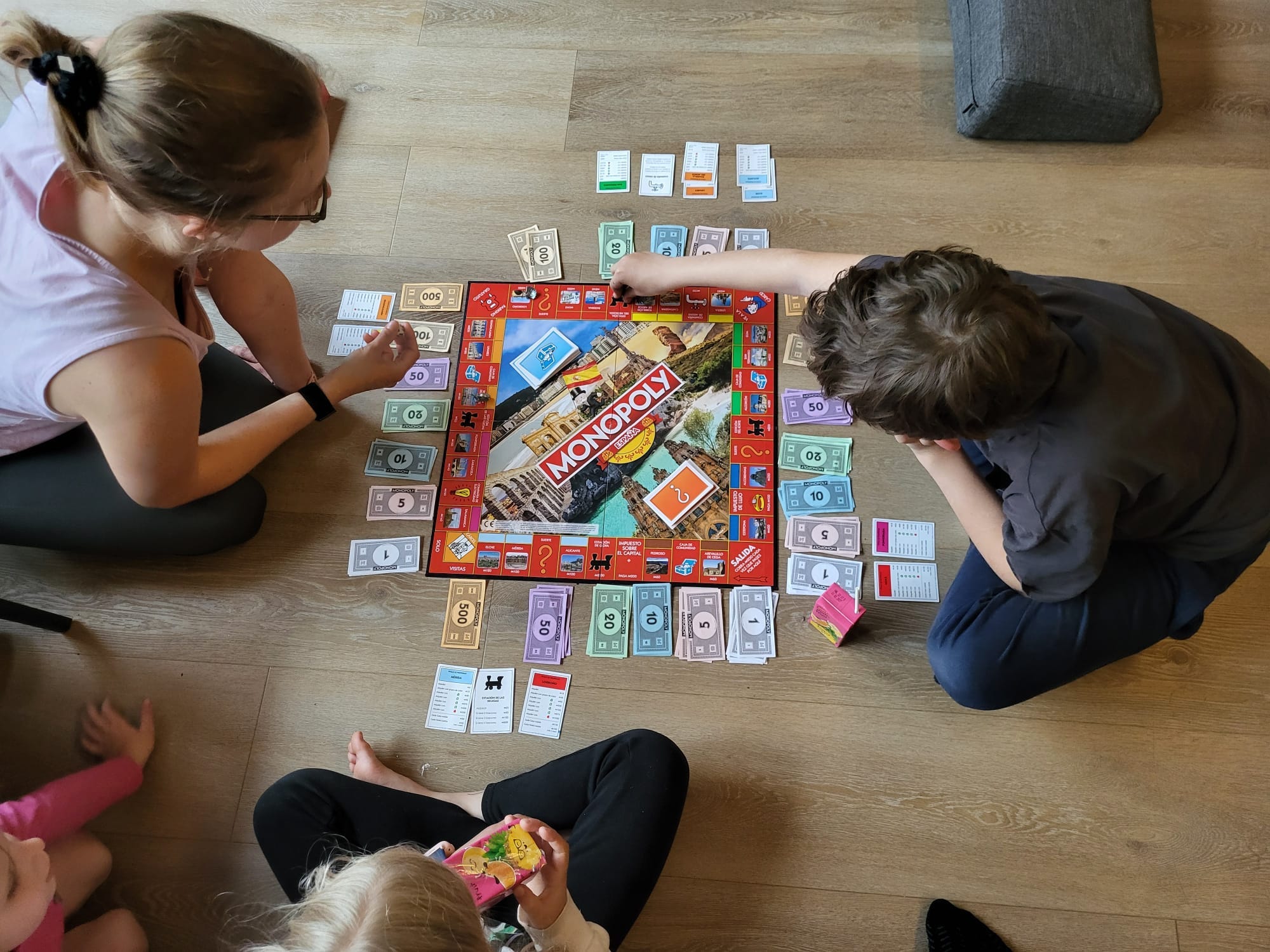
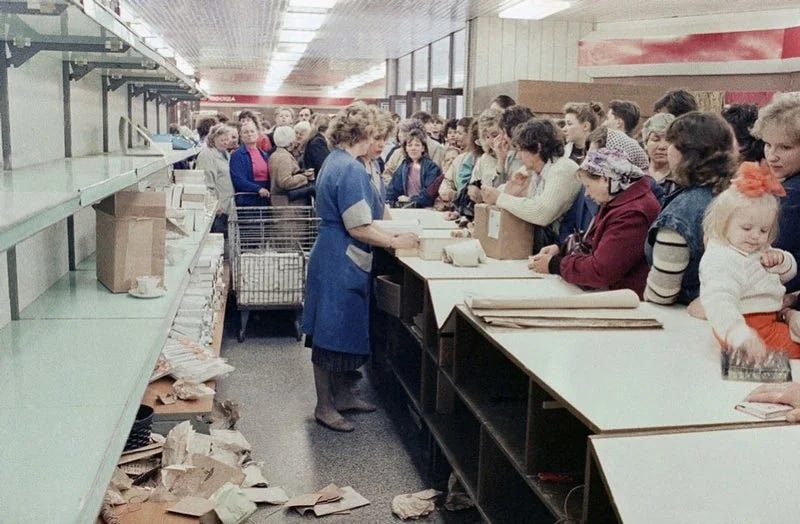
The set you see above we picked up on a recent trip to Spain (where, as it happens, we’re headed again soon). Before that, we played on a different board, the one my father built by hand in the Lithuanian SSR, as it was then, around 1990. In the final days of the Soviet Union, you couldn’t just walk into a store and buy a board game. You couldn’t walk into a store and buy much of anything, really. The photo below gives you a pretty good idea.
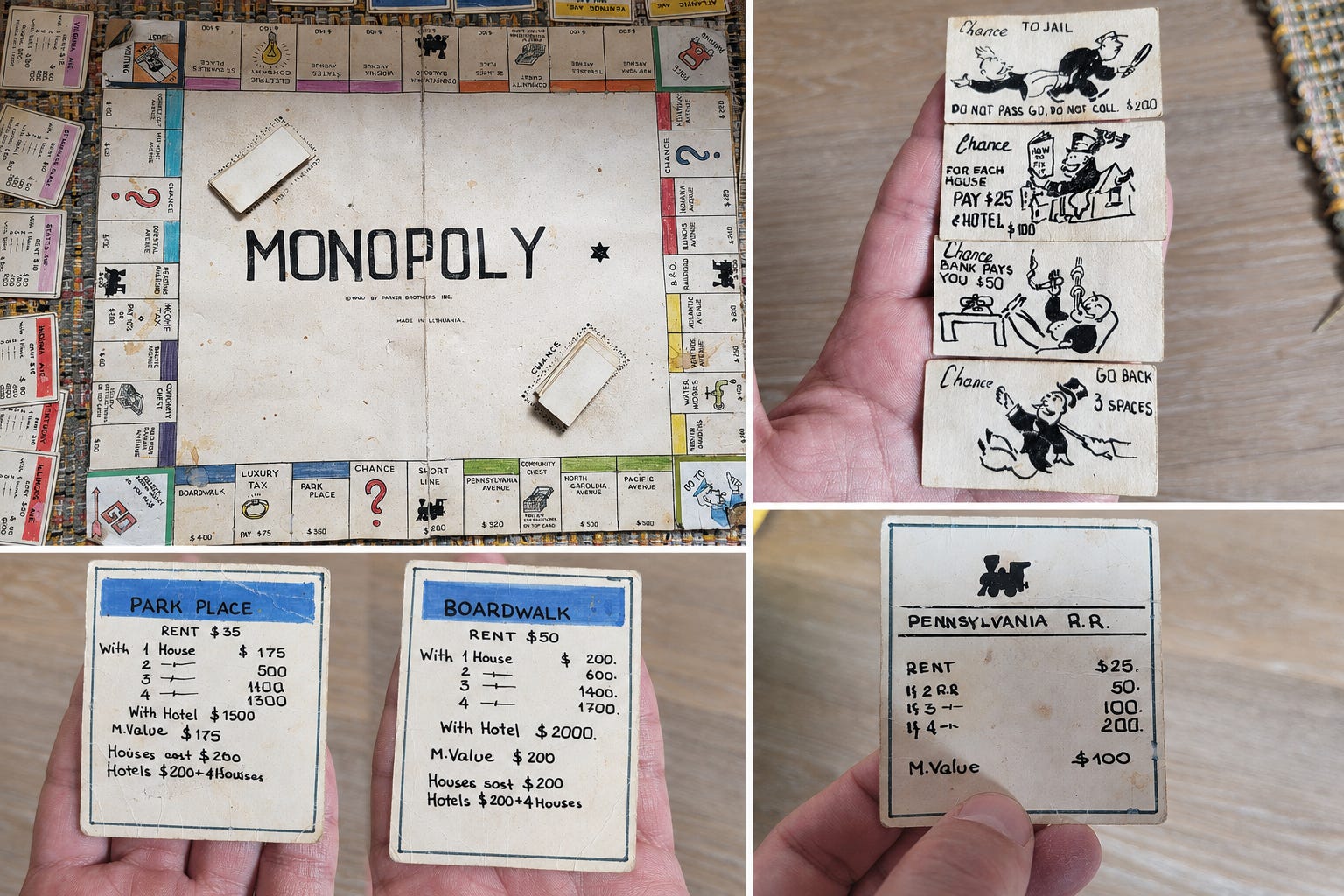
At the time, my father was working at the national TV station, one of the few places where Western media was starting to trickle in. It was Perestroika, after all. He pieced together what the game looked like from foreign films and videotapes and reconstructed the rest from memory. He spent days drawing it. Every square, every property card, every Chance card, right down to the little hand-drawn Monopoly Man. He cut and colored the money himself. He wrote out every rent, every mortgage, every hotel price — all by hand, and with very little English to go on. And to this day, the thing looks great. Take a look. I pulled it out of the basement a couple of months ago.
And it wasn’t just the board. My father was an electrical engineer by trade, and the kind of man who, when we didn’t have something — and we didn’t have much — would simply build it. When we didn't have a radio, he built one himself — a transistor radio. When we didn't have a television set, he built one of those too, out of spare parts. Working at the TV station helped; there was always something lying around that he could put to use.
Remember, this was the Soviet Union. Everything was supposedly owned by everyone, which, as people liked to joke, meant nothing really belonged to anyone.
These days the board has earned a more respectable place in the house. We only bring it out on special occasions.
At the time, I never thought about why he’d made it. To me, it was just something fun to do with the family. It was only years later, reminiscing about those days, that I asked him. His answer turned out to be the very thing I find myself thinking about now, decades later, playing store-bought Monopoly with my own kids.
He didn’t build it just to keep us entertained. He built it to teach us about money. About capitalism. He knew the old socialist system was finished, and he wanted us to understand how the world actually worked before the new one took its place.
The Beggar’s Mentality
Now, Monopoly isn’t an overly complicated game. But there’s a real streak of brilliance buried in it. Played enough, it teaches you to think in assets and cash flow, in bets and odds, almost without you noticing.
It also teaches you about scarcity… albeit in a subtle way.
For instance, I noticed that after going bankrupt a few times, my kids, especially the younger ones, slipped right into that mindset. They got nervous about running out of money, so they’d stop buying properties and refuse to build houses, just in case they came up short again. I kept telling them these were assets, that they throw off cash you can use later to pay the other players and to buy even more property. It didn’t really sink in. They had to learn it by playing.
Watching them, I often find myself thinking about the marshmallow test. You probably know it. Researchers at Stanford sat little kids down in front of a single marshmallow and told them they could eat it now, or wait fifteen minutes and get two. Then they left the room and watched who could hold out.

The experiments ran back in the late 1960s, led by a psychologist named Walter Mischel, and when the researchers followed up years later, the kids who’d waited had done better in life: better grades, more self-reliance, and — decades on — even lower BMIs.
Over the years, though, people have poked holes in the test. Larger studies and better controls pointed to other factors too: family income, parental education, home environment, plain old cognitive ability. Once you account for those, self-control still matters. It just isn't the whole story. Growing up in scarcity, with parents who often couldn't afford to wait themselves, clearly matters too.
I don’t know whether my father ever heard of the test. But he understood, in his bones, what scarcity can do to a person. We even had a word for it back home — one that translates, roughly, to a beggar’s mentality. And he did his best to inoculate us against it, even if the only tool he had was a homemade Monopoly board.
The $175 Million Marshmallow
I was reminded of all this yesterday, by an entertainment story of all things. Now, I’m not one for entertainment news. But if you ever wanted a real-world marshmallow test, this is it.
It’s about “Obsession,” the indie horror breakout of the year. The film cost $750,000 to make. It’s now grossed more than $175 million. That’s a 233x return, roughly what you’d have made putting money into Bitcoin back in 2014.
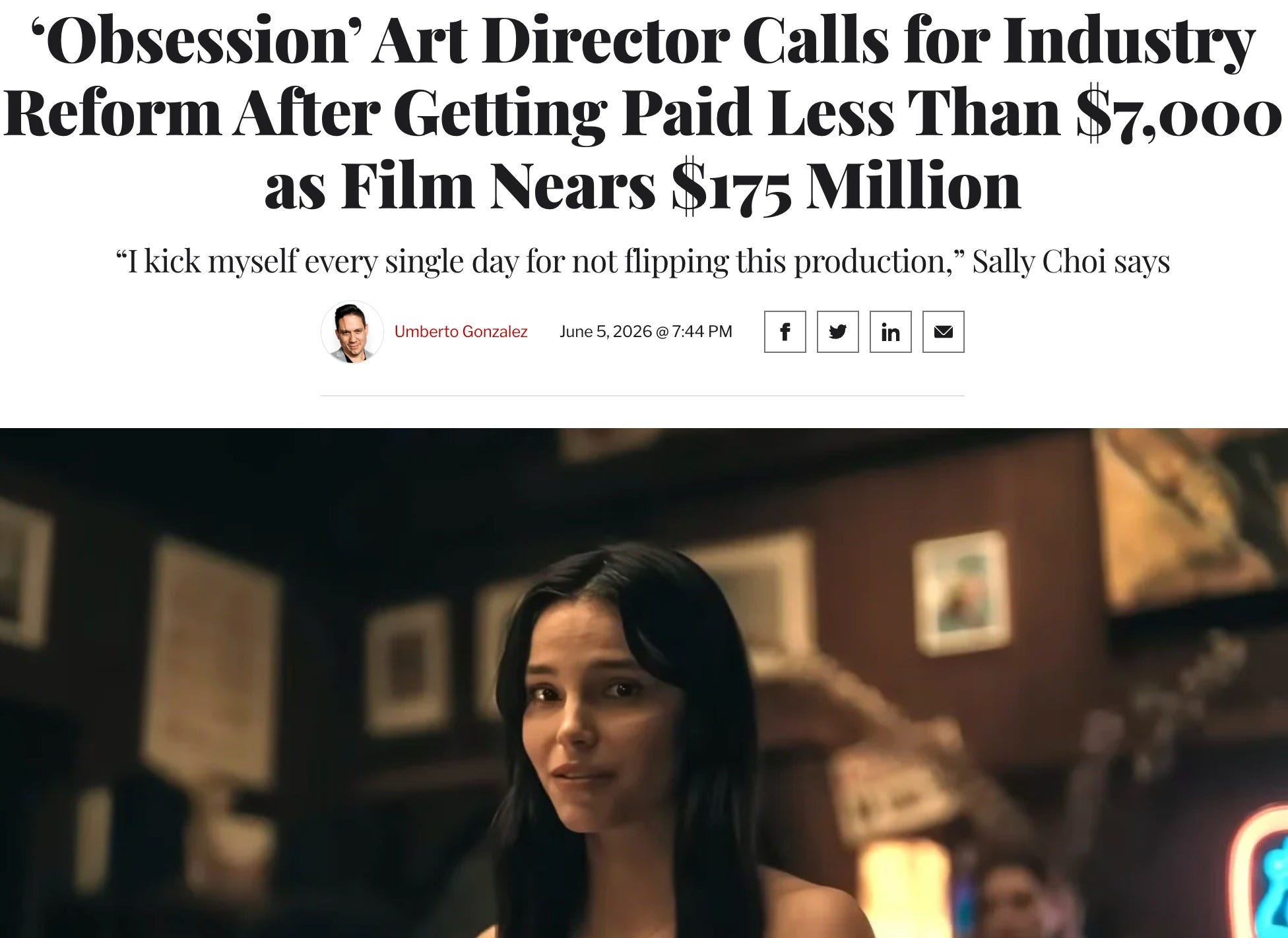
There was an art director on the film. Instead of pushing for any piece of the upside, deferred pay, back-end points, a sliver of equity, all of it possible on a small indie, she took the cash: $300 a day, which came to about $6,700 after taxes for the whole job. For someone at her stage, no big credits, no name yet, it was a perfectly reasonable gig. Holding out for a share of some uncertain future would have meant risk, and she preferred the marshmallow now. Fair enough.
But now that the film has become a runaway hit, she’s gone public, furious, complaining about being robbed and calling for “industry reform.”
I sympathize with her. But it’s also about as clean an example as you’ll find of how badly people misunderstand capitalism — and delayed gratification along with it. I don’t know whether it was a scarcity mindset, a simple aversion to risk, or just a lesson nobody ever taught her. Either way, she chose the marshmallow. The guaranteed wage. The money in hand.
The people who got rich off the film took the other side of the bet. They put up the money and accepted that it would probably flop, the way most small films do. This time it paid off. Plenty of times it wouldn't have. She took no risk, so she got none of the upside. That's simply how the math works, or at least how it works when markets are allowed to function.
And the irony is that it’s often the young who get hurt most by misunderstanding these simple truths.
That seems to be the case here too.
By going public and attacking the very production that gave her the break, she’s basically setting fire to her own career. Instead, she could have taken the L, as the kids say these days, and used it to her advantage. A breakout hit on your résumé is exactly the sort of thing studios chase. She could have ridden that credit straight into something bigger.
In Closing…
Before I let you go, I want to leave you with one chart. It captures the gap between someone who chooses to consume today and someone who chooses to own and wait. Take a look. It tracks three things since the year 2000: gold, the S&P 500, and the wage the average person actually lives on.
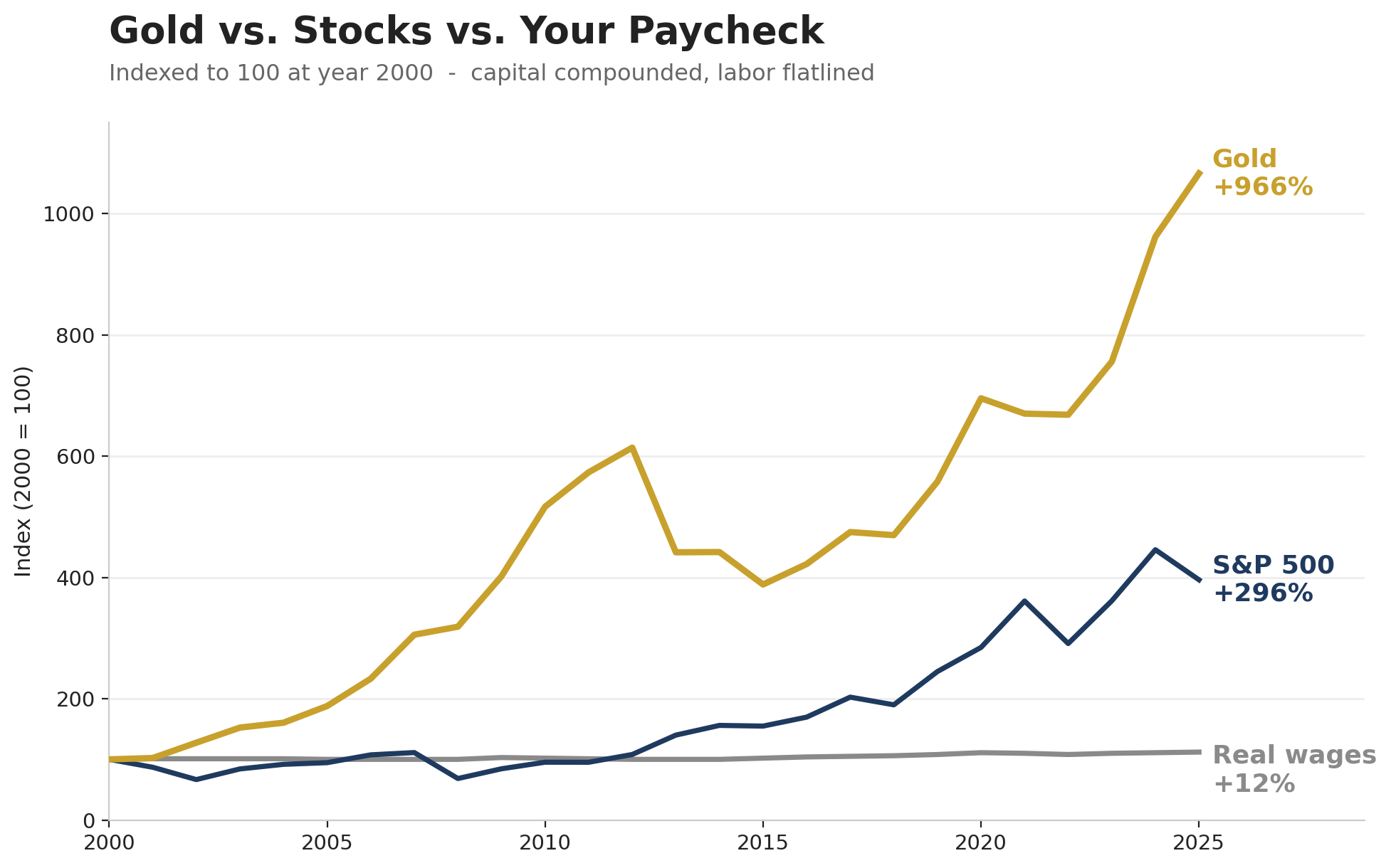
As you can see, since 2000 gold is up about 1,000%, the S&P 500 just under 300%, and the median wage, the thing most people actually live on, up only about 12% after inflation. Yes, gold returned more than three times as much as stocks. But that’s not even the point. The point is that both gold and stocks ran circles around the paycheck.
Now, personally, given everything going on, I'll take gold (and gold stocks) over mainstream equities any day of the week… especially at today's valuations. But either way, the lesson is the same: if you can hold off on the easy reward, live below your means, and yes, take a risk now and then, you'll likely come out far ahead of the person who won't.
Does it take discipline? Dedication? A bit of courage? Sure it does, nothing is ever guaranteed. But if you can teach yourself, or your kids, to reach for the two in the bush instead of grabbing the one in your hand, that’s the whole game right there.
Have a great weekend,
Lau Vegys
Great article. Like I told my kids when they were growing up:
In most instances:
Short term pleasure equals long time pain.
Short time pain equals long term gain.
Great article!! Thank you so much for sharing! The story about your dad making a Monopoly board was awesome - what a cool dad! And relating the marshmallow experiment to the art director as a real life example, priceless.