


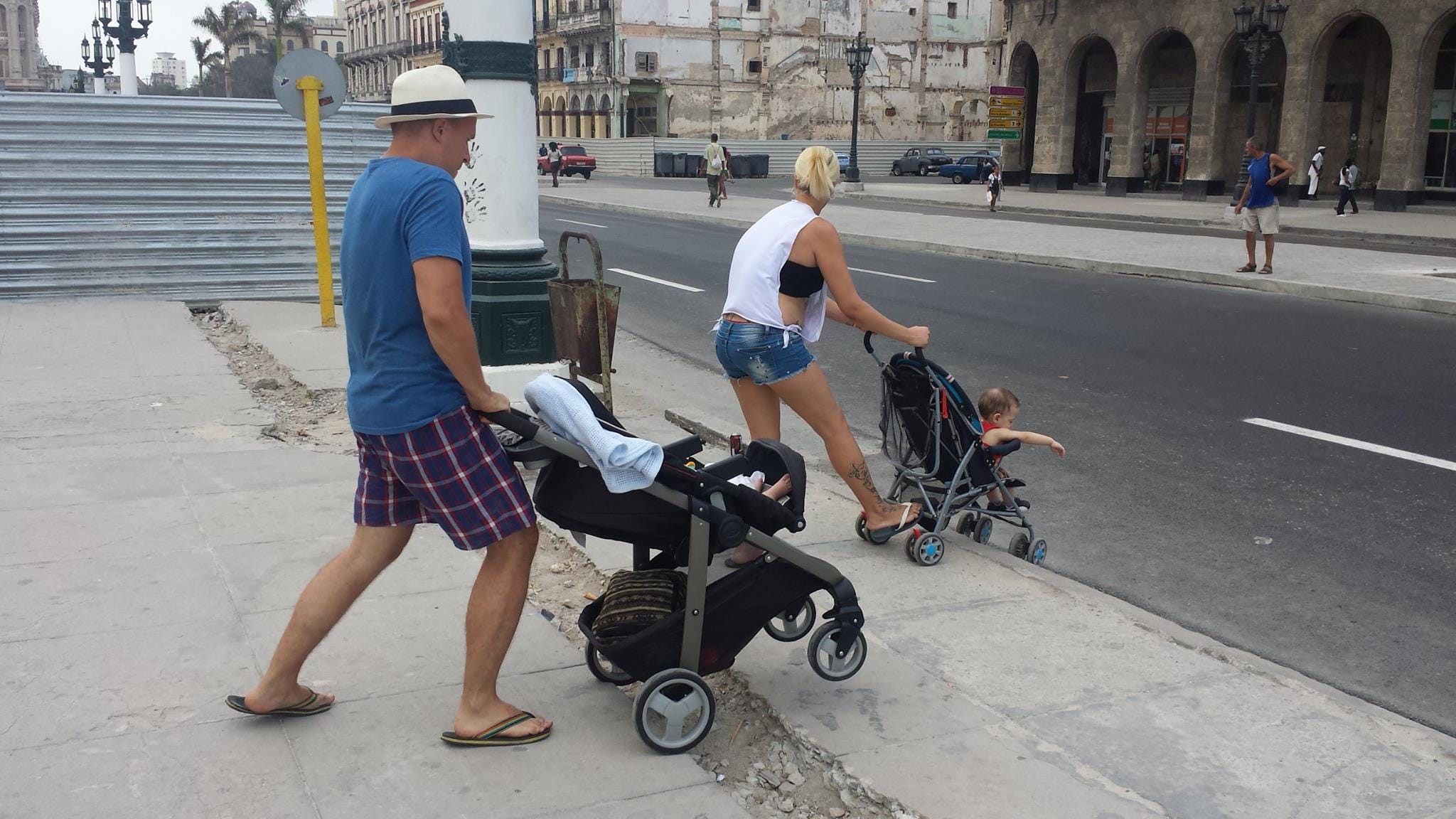
I’ve been meaning to write this piece all month. Several years ago, almost to the day, my wife and I were in Cuba with our newborn. We spent a couple of weeks in Havana, and by the time we were done, I had promised myself I would never go back. Not until the country was free, or at least on its way to becoming free.
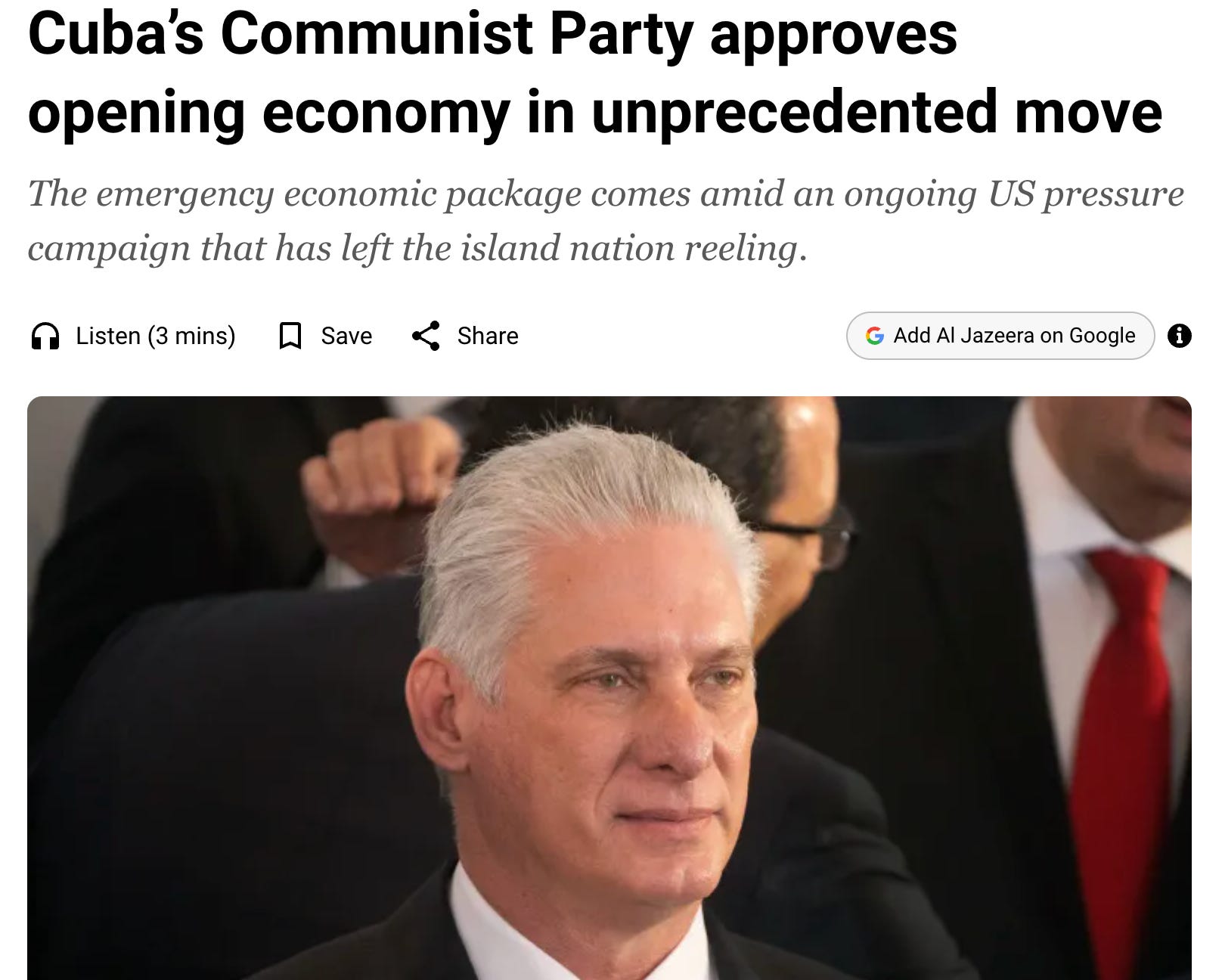
Well. Last week, Cuba’s Communist Party passed 176 economic reforms in a single legislative session. I’ll get to the specifics later, but the short version: it’s the biggest rollback of state control since 1959. Private firms become legal. Cubans can run more than one business and sell at prices they choose. The regime even asked the Miami diaspora, the same people it spent sixty years calling traitors, to come back and invest.
Looks like I may have to come back sooner than I originally thought.
Two Kinds of Everything
It helps to think about Cuba the way you’d think about its cars, because on the streets of Havana there are really only two kinds.
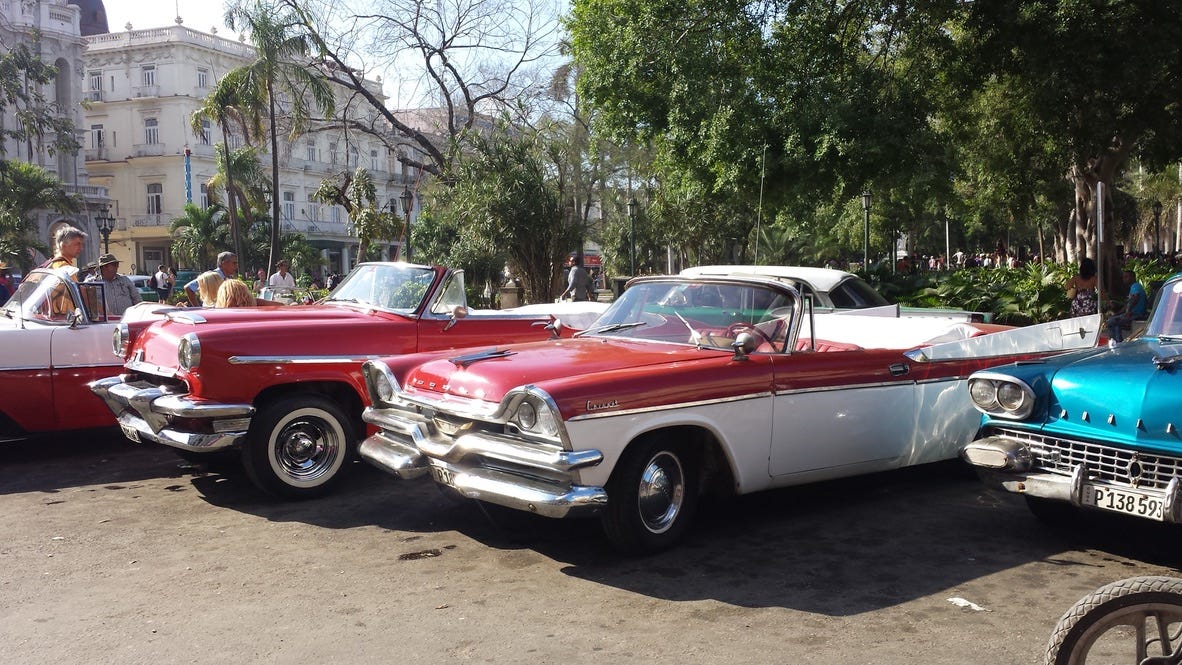
The American ones came first. Chevrolets, Buicks, Cadillacs, the odd Ford Fairlane. They arrived before the revolution, and the Cubans have kept them running for seventy years on ingenuity and scavenged parts. They’re gorgeous. Repainted in candy pinks and seafoam greens, chrome polished, engines rebuilt with whatever was available. They look like they belong in a museum, but people use them as taxis. They represent the country Cuba was before 1959, a country that was not without its own problems, but one that produced something beautiful enough to be worth preserving.
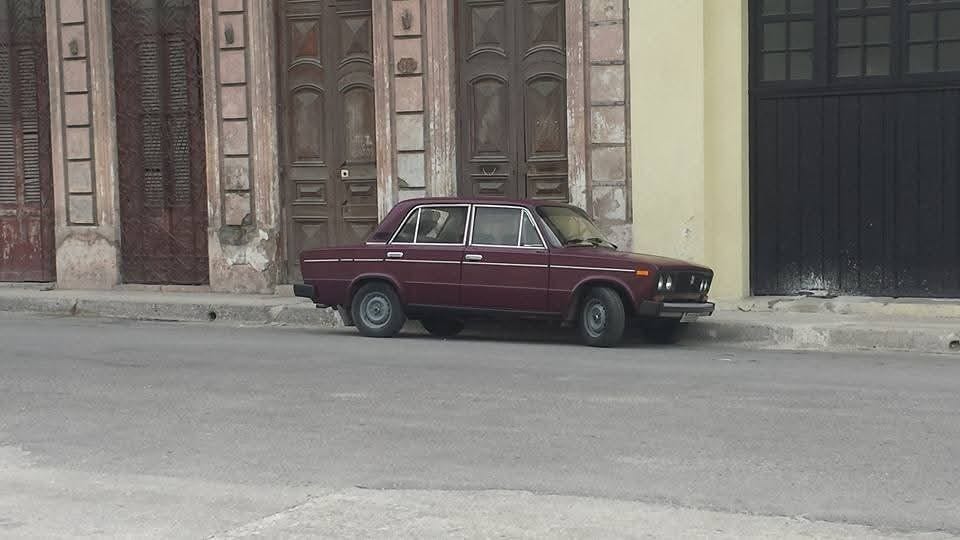
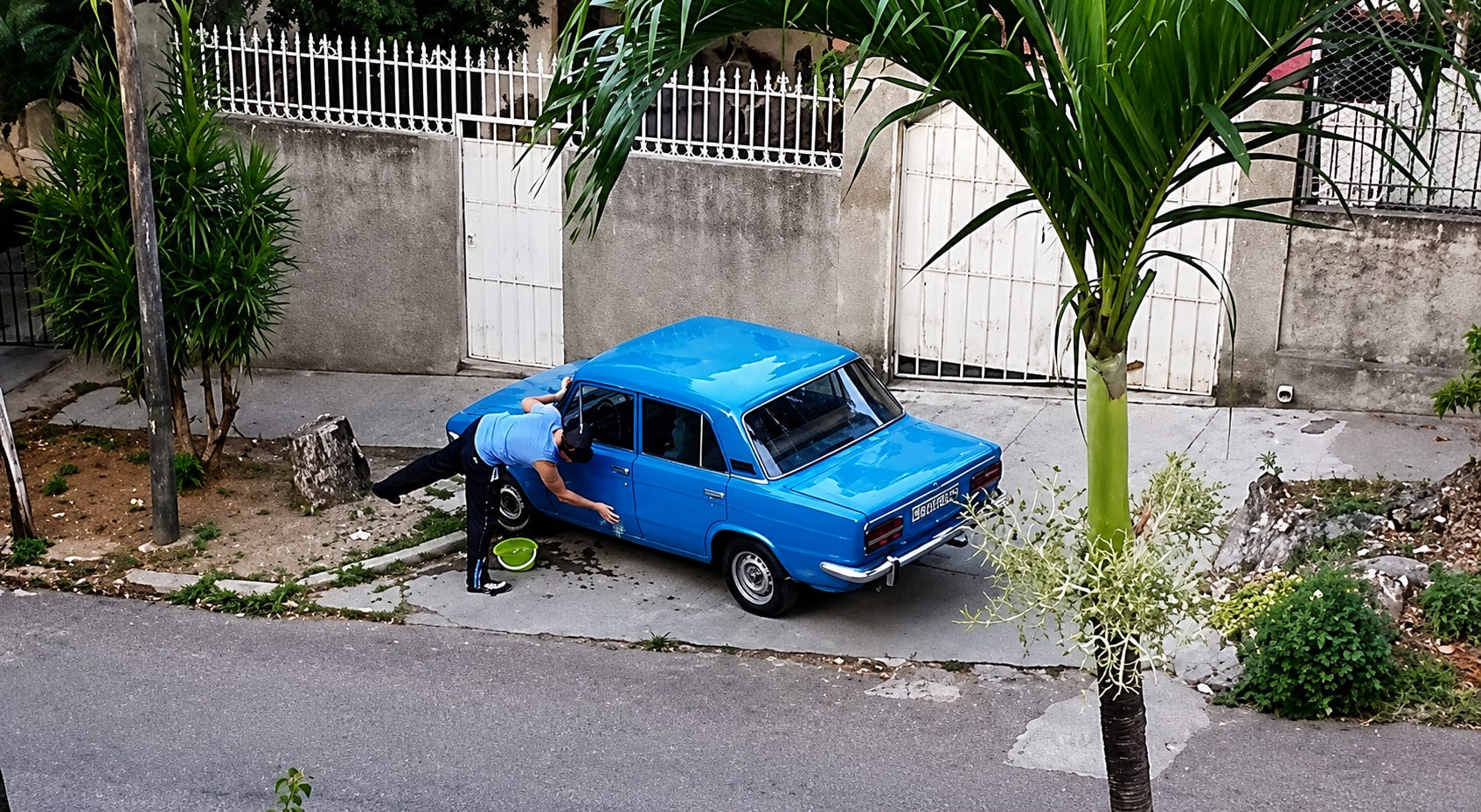
Then there are the Soviet ones. Ladas, Moskvitches, the occasional UAZ. They showed up after the revolution, courtesy of Moscow, and they look exactly like what they are: machines designed by committee for a country where aesthetics were considered a bourgeois indulgence. Boxy. Functional. Ugly. Rusting at the edges. Nobody polishes a Lada. You drive it until something falls off, and then you weld it back on.
Cuba is an amalgamation of those two things. The beautiful old architecture of Havana Vieja alongside Soviet-era concrete. Both crumbling, incidentally. The colonial plazas next to the housing blocks.
And it’s not just the buildings and the cars. It’s the people, too.
In our case, the contrast was made even sharper by the fact that we were coming off about half a year living in Medellín, Colombia. Which, contrary to what you might think after watching series like Narcos, is full of some of the warmest and most polite people you’ll ever meet. Before hopping on a plane to Cuba, we were visiting Cartagena, a Caribbean resort town on the coast. For all the touristy hassle you get there, Cartagena is full of the same easygoing, generous Colombians.
That’s not to say Cubans don’t have that same Latin warmth in them. They do. You certainly feel it in private, at dinner, in someone’s home. But in the transactional parts of daily life, the parts where you deal with strangers, something else comes through.
While in Havana (and I’ll admit we almost never made it out to the countryside, where I’m sure people are quite different), I lost count of the situations where shared-ride drivers would get angry at you for not letting them overcharge you. I mean, I wasn’t born yesterday. Getting overcharged is normal in Latin America. You kind of expect it. But everywhere else, you negotiate, you laugh about it, you meet somewhere in the middle. It’s not a big deal. My experience in Cuba was different. Whether dealing with drivers, beach equipment renters, or anyone else, I lost count of how many times we were almost made to feel guilty for not wanting to be ripped off. As if the fact that you have more than they do entitles them to whatever they decide to charge. And just as often, the door was shut with three magic words: es del gobierno. It’s the government’s.
I recognized it immediately, of course.
Growing up in the good old USSR (well, maybe not so good), you got used to a general rudeness from people in supposed positions of power. And I don’t just mean state officials or bureaucrats, though those too. Even a cashier at a local state-run store could ruin your day by refusing to hand over goods your family desperately needed. In the Soviet Union, there was a whole category of products called deficit goods — товары дефицита — things that were perpetually in short supply: sausage, soap, children’s shoes, you name it. You didn’t buy them. You hunted for them. And when you finally tracked down what you needed, you still had to get past the woman behind the counter.
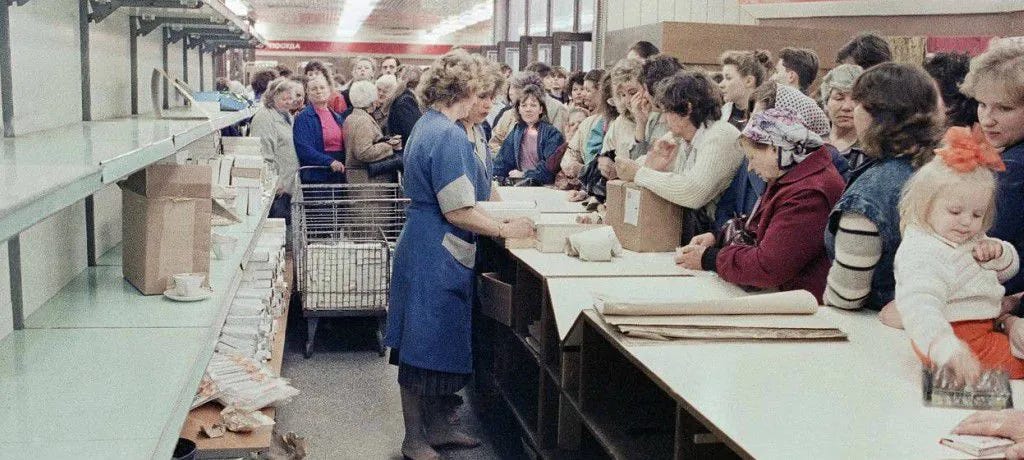
There were running jokes about the downtrodden Soviet citizen being pushed around by the angry lady in the fake fur vest, because in that relationship it wasn’t the customer who held the power. It was the person supposedly doing the serving. Perverse incentives create perverse outcomes. I understood that since I was seven years old.
Which brings us, conveniently, to the other thing Cuban life and Soviet life have always had in common: scarcity.
Come Back After Five
Scarcity is one of the things you will inevitably run into after touching down at José Martí International Airport. And I mean even as a tourist, which is admittedly a much gentler version of the scarcity the locals have to endure. Just take a look at this photo of a store interior I shot through the window on one of the streets of Havana. And yes, that’s a cat on the countertop next to the scales.
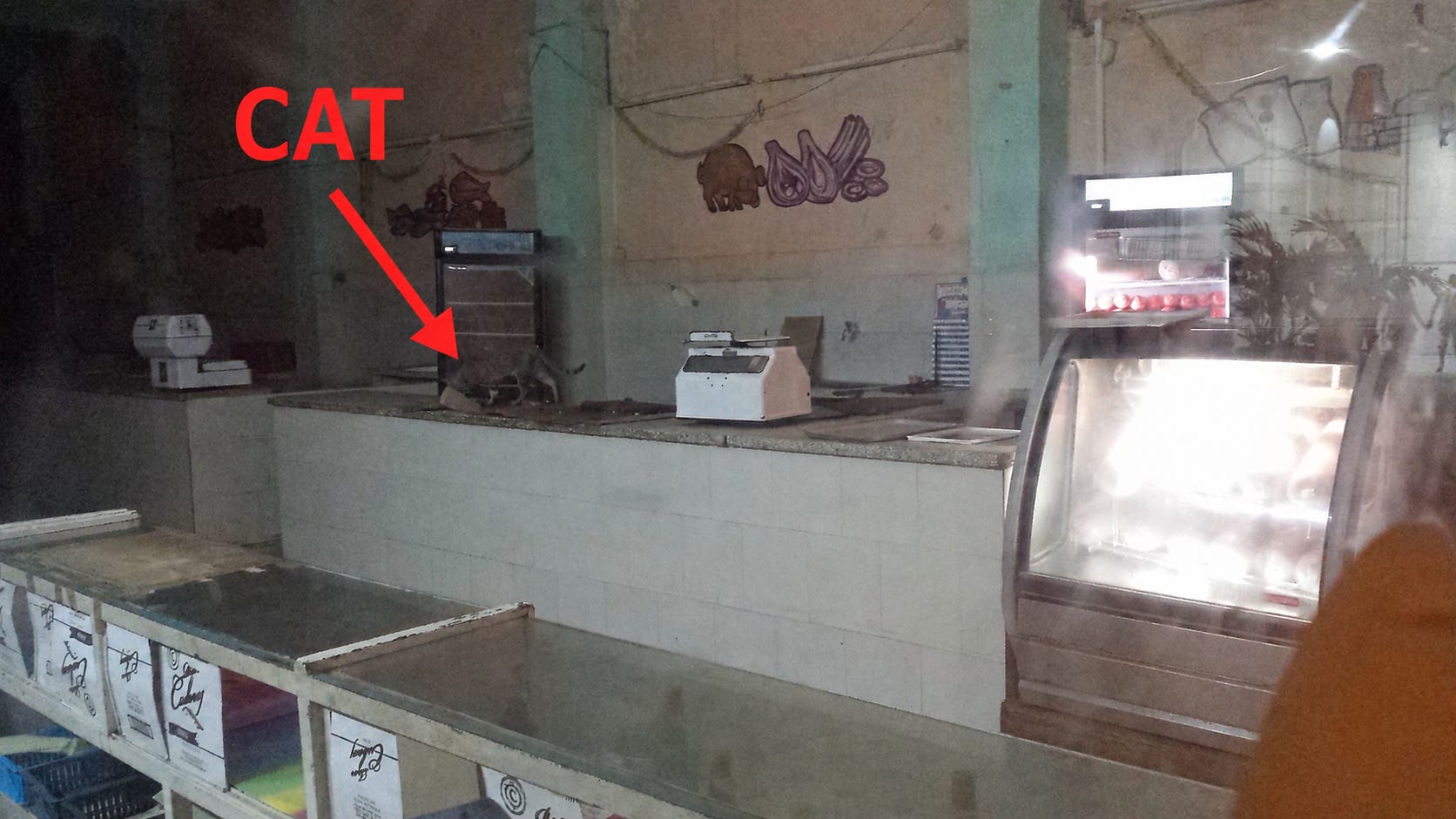
It would take me pages to cover everything we found scarce on our trip to Cuba — from the state-run dollar stores, where imported goods were sold in convertible pesos at prices no ordinary Cuban could dream of affording, to the pharmacies where basic medication was perpetually out of stock. So I’ll just share a few anecdotes.
There was a restaurant near the place we rented, a nice-looking one with colonial arches and a pleasant feel to it. I used to frequent that place quite a lot during the day, for the simple reason that I needed internet. Oh — yes, that’s another thing. In Cuba, you can’t just have internet at home. When I was there, a handful of hotels offered it, but if you were a local, or anyone renting a room in a casa particular — a private homestay — you were stuck using the state telecom monopoly’s public wifi hotspots. To get online, you had to buy a prepaid scratch-off card from ETECSA, the only telecom company on the island. I have no idea how locals could afford them back then — each card ran about one or two CUC per hour.
Note: CUC was the convertible peso, Cuba’s tourist currency, pegged one-to-one with the U.S. dollar. Locals earned in regular pesos, the CUP, at a fraction of the rate. The government scrapped the dual system in 2021, but back then it created two parallel economies on the same island. And in the peso economy, one or two CUC per hour of internet was a luxury most people couldn’t touch.
What you’d do is locate one of the wifi towers mounted on poles across the city’s streets and parks, and join the crowd of people sitting on sidewalks, faces glowing from their phone screens, burning through their minutes. Or, if you were a tourist spoiled by the conveniences of modern life, you’d find a restaurant near one of those towers and use the internet from there. That’s what I used to do.
But whenever I’d come to that place — and like I said, it was a nice-looking restaurant, colonial architecture, pleasant atmosphere — I would try to order something off the menu. I’d come there for breakfast and stay through dinner. And there was always something missing. Simple things, really. Some days it was the orange juice. Other days it was the eggs. The scene was always the same: I’d place my order, the waiter would disappear into the kitchen to check, and come back with the verdict. No hay huevos. No hay jugo de naranja. No eggs. No orange juice. Come back after five.
Funnily enough, the one time I did come back after five, the eggs were still missing. Apparently, the state supply chain hadn’t received the memo.
For our living arrangements, our family rented two rooms in a casa particular from a Cuban family in their own home. It was a large apartment, maybe two stories, and the family lived in the other half. By Cuban standards, they were doing well. Very well, in fact. They had a place of their own that they could rent out to foreigners — one of the few forms of private enterprise the government had grudgingly legalized back in the late nineties. They could charge in dollars, which put them in a different universe from their neighbors earning in pesos. Keep in mind, a single night in a casa particular could earn more than a doctor made in a month.
The man of the family, José, had actually worked in the Soviet Union during the Cold War. Cuba and the USSR ran exchange programs for officials and workers, and he had spent years there. He drove us around in his old but lovingly maintained Lada, taking us to beaches and corners of Havana we never would have found on our own, in exchange for some dollars, fuel, and the chance to speak Russian, which he said he hadn’t had anyone to practice with in years.
One afternoon, we offered José a package of diapers we had brought from Colombia. We knew diapers were a deficit item on the island — available only in the dollar stores, where a single pack cost a small fortune in convertible pesos. Our baby had already outgrown them, and José’s kid was a toddler, even bigger than ours, so they were clearly going to be too small. We offered them anyway, not wanting them to go to waste, but we were half expecting a polite no.
What happened instead is something I still think about. José, who had been saying we were running late, unceremoniously pulled the kid over, put the too-small diapers on him right there, and said: there you go, see? Fits great. We can use these.
Again, I remind you: relative to their country, this family was well off. I don’t know whether they ended up using the diapers themselves or trading them for something else, but they were clearly happy to have them. To this day I feel a strange mix of amusement and sadness when I think about that moment.
It was a similar story with José’s wife, though from a different angle. Each morning, she prepared eggs and coffee for us. We paid for breakfast separately, in dollars.
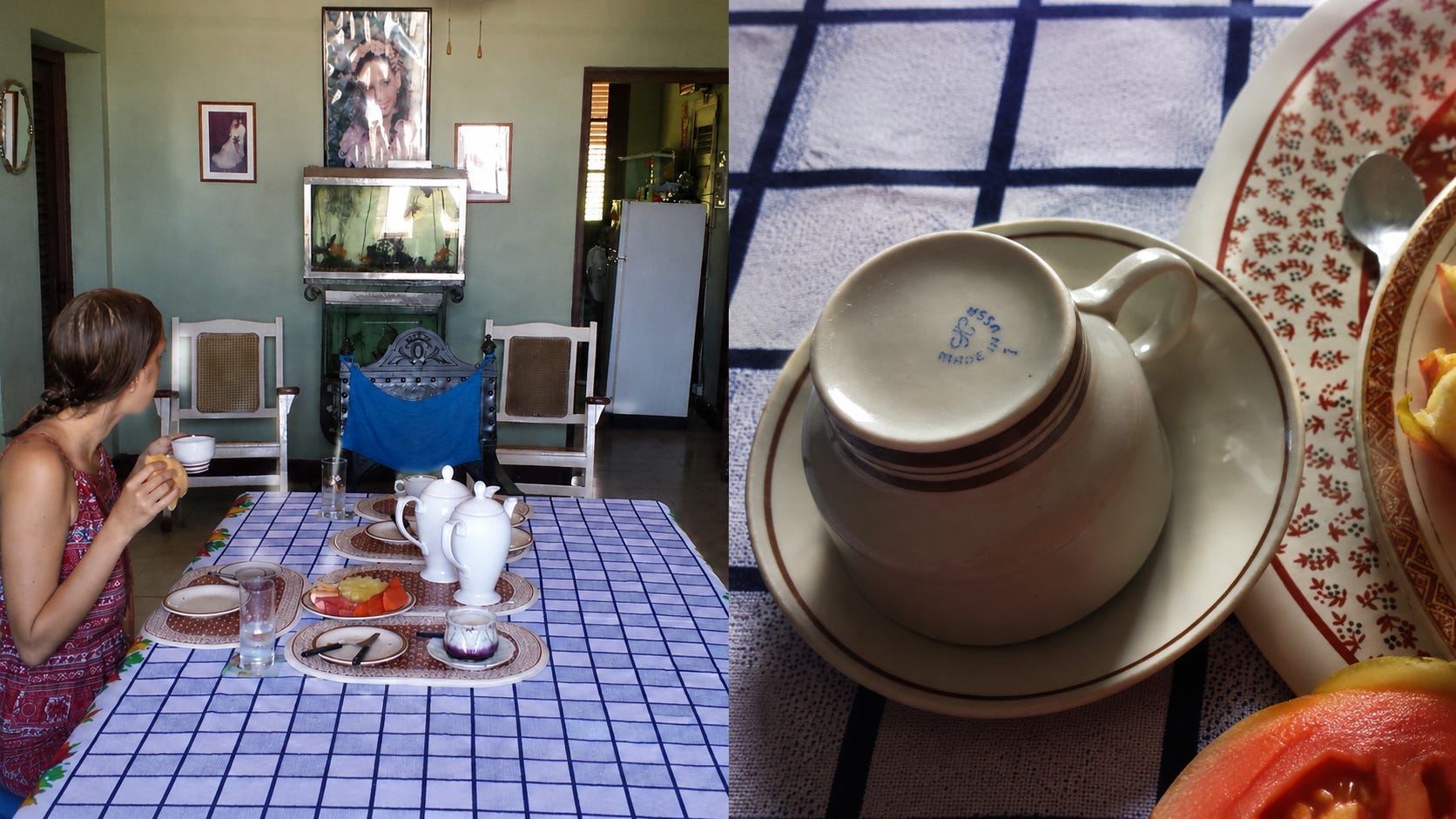
One day, though, my wife realized our two eggs kept arriving with only one yolk between them. At first we figured she was skimping to save money. And in a sense, she was. No biggie… it's her kitchen. But only later did we realize it was because even something as simple as an egg was rationed. The way the system worked back then — and probably still does today — every Cuban household gets a fixed monthly allotment of eggs, along with every other staple: rice, beans, sugar, coffee, cooking oil. You can see them listed on the board at the local bodega, in the photo I took back then.
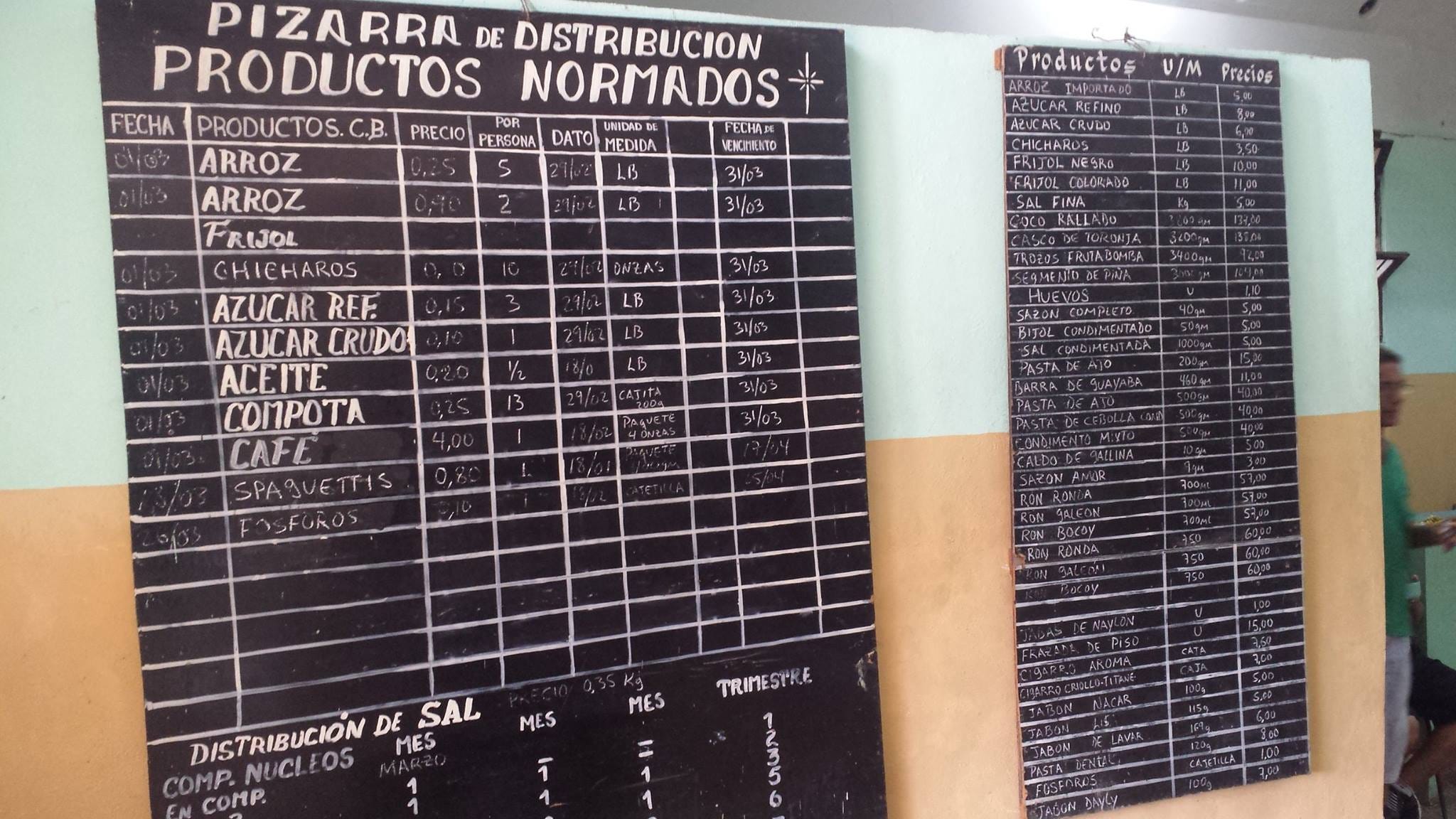
Used up your monthly ration? Tough luck. Sure, you could cut corners — get some from a neighbor, or from someone who worked the system. But officially, it didn’t matter that you had tourists staying over who needed feeding. For all intents and purposes, the eggs simply didn’t exist. At least not for the rest of the month. The ration board didn’t care about any of that. It cared about quotas.
Not the Embargo, Stupid
Now, you’ll hear a certain kind of person, usually a leftist American, explain that Cuba’s problems are really the fault of the U.S. embargo. I ran into a few of them in Havana, and I get them every now and then in my comments section.
For the record, I think the embargo makes little sense. It’s been in place for over sixty years and hasn’t achieved a thing, except maybe giving the regime a convenient scapegoat for its own failures.
But the embargo isn’t the reason Cuba is poor. Socialism is.
To start, and I’m always amazed by how many people don’t know this: the embargo is American. It is not global. The entire rest of the world has been open for business with Havana for decades. Cuba trades with Canada, with Europe, with China, with Russia, with most of Latin America. If the island’s problems were really about trade access, sixty years of commerce with every other nation on earth should have been more than enough to build a functioning economy. It wasn’t.
And what, in the name of the workers’ paradise, does the embargo have to do with the fact that Cubans couldn’t start a business until recently? That they couldn’t own a company, set their own prices, hire employees, install internet in their homes, or speak freely without risking a visit from state security? The embargo didn’t do any of that. The regime did. Every one of those restrictions was an internal policy choice, made in Havana, by the Communist Party. And of course, it was utter failure. All of it.
Funny enough, Cuba’s president Díaz-Canel admitted as much in his own words. The island’s troubles, he said, come not from the U.S. embargo but from the slowness, the bureaucracy, the rules that hold back any Cuban who tries to produce something. Here’s the full quote:
Hay trabas que no vienen de afuera, ni del bloqueo. Hay lentitud, burocracia, normas que frenan al que quiere producir y decisiones que hemos postergado.
Translation: “There are obstacles that do not come from outside, nor from the blockade. There is slowness, bureaucracy, rules that hold back those who want to produce, and decisions we have postponed.”
Díaz-Canel said this on June 17, 2026, in his closing speech at the Extraordinary Plenary Session of the Communist Party Central Committee, the same session that preceded the 176 reforms I mentioned at the beginning.
So what’s changing?
From what I can gather, the full document hasn’t been made public. Cuban state media and parliamentary reports reference a package grouped into 23 themes, but the actual text remains under wraps. What we know from the coverage is this: foreign investors no longer need a state partner. Private firms become legal. Cubans can run more than one business and sell at prices they choose. Private banks are permitted. Real estate development opens up. And the diaspora, the millions of Cubans who left for Miami and built lives from scratch, are invited back as investors.
In sum, it’s a big one.
Now, the official line is they’re modeling it after China and Vietnam. Managed capitalism under party control. Díaz-Canel even promised a model ‘better than China’s.’
In reality, they’re preventing catastrophe. The economy is in freefall. The power grid barely functions, especially after the loss of Venezuelan oil, which Trump’s pressure campaign helped cut off. Hundreds of thousands of Cubans have left in the past three years alone. Between the internal collapse and Washington’s secondary sanctions driving out what foreign investors remained, the regime has run out of room to pretend. Which is why they don’t have the luxury of half-measures this time. Which is why the 176 reforms.
Can they pull it off?
It’s an open question, but I’m cautiously optimistic. The regime has announced reforms before that were watered down, delayed, or quietly reversed, though nothing on this scale. The real test isn’t the announcement. It’s what happens in six months, in a year. That’s when the old guard will realize that real reform means real loss of control. There will be those in the regime who do their best not to let power slip out of their hands, and it remains to be seen whether the reformers can win out. But I’m cautiously optimistic.
It wouldn’t be the first time. I watched it happen in my own country.
Maybe it’s time to go back to Havana.
Regards,
Lau Vegys
Another great article, Lau. My dad was in Cuba in ‘48 and my Brother in Law is in the Cigar biz and has been there a couple of times over the past 10 years or so. Havana Club Rum has gone downhill and so have the cigars, but we all would like to see some free market resurgence. Excellent point about the US embargo having little effect and no excuse for internal bureaucratic failure while Cuba traded with multinationals.
I worked with some Russians a few years ago who lived through the collapse and heard amazing and often hilarious stories of survival through the transition to a semi-free market.
Keep up the good work,
Jonathan
Another wonderful piece. You are very clear, concise and approachable. And I hope Cuba can once again be the beautiful and vital place it was before the commies took over. This time, even better.
But keep the old cars. They are evidence of real humanity and possibilities for the future.