


Treasury Secretary Bessent was at a dinner at the Library of Congress last month. And he casually confirmed that an executive order is coming that would require proof of citizenship to hold a bank account. Mind you, he wasn’t talking about just new accounts. This would be retroactive. Every existing customer at every bank in the country.
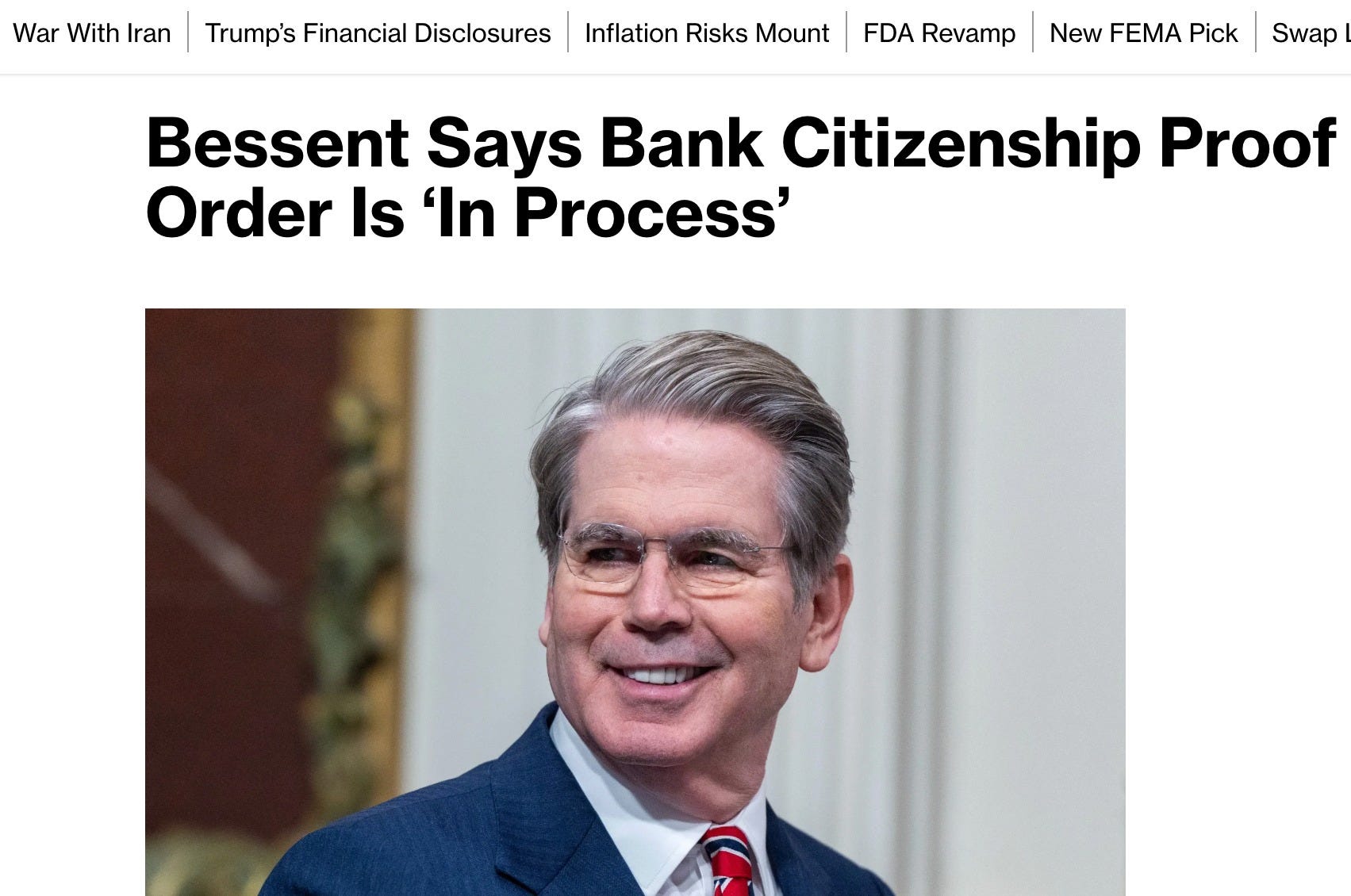
Now, a couple of outlets picked this up. But this should have been front-page news on every major network in the country. Especially considering that they spent 20 years, twenty years, getting Americans to accept REAL ID. Arm-twisting every state in the country to upgrade their driver’s licenses to a federally compliant format. And now, just like that, REAL ID won’t even qualify. You’ll need a passport. About half of Americans don’t have one. So you’re looking at roughly 150 million people who will have to go get a passport just to keep their checking account open.
And that’s where this whole thing starts to get ugly.
Every U.S. passport issued since 2007 comes with an embedded biometric chip. Your facial data, digitized and stored. So what this executive order actually does is funnel tens of millions of Americans who have never handed their biometrics to the government into doing exactly that. Not because they committed a crime. Not because they’re under investigation. Just to keep a bank account. Genius, really.
You could look at this and think, alright, another piece of bureaucratic overreach. But it’s not a standalone thing. It’s one piece of something much bigger. And once you see what it connects to, it’s impossible to unsee.
Catherine Austin Fitts, a former Assistant Secretary of Housing under George H.W. Bush, has been talking about this for years. She’s not some commentator. She was Senate-confirmed, managed hundreds of billions in government funds, and claims she saw firsthand how the financial plumbing actually works behind the scenes. She describes three systems being built simultaneously. Three pillars, each with a perfectly reasonable public explanation. But together, they create something that has never existed before in human history. The three pillars are: a digital identity system, programmable money, and the surveillance hardware to enforce both. I’ve touched on identity and money in previous pieces (catch up here, and here). But today, I want to focus on the third pillar. The hardware. Because without the physical infrastructure to monitor everything in real time, programmable money is just code and digital ID is just a database. The hardware is what makes the whole thing actually work.
The Brain
So when we talk about hardware, there are really two layers. There’s the storage and processing layer, the places where all this data actually lives and gets crunched. And then there’s the collection layer, the things that feed information into those systems. Let’s start with storage.
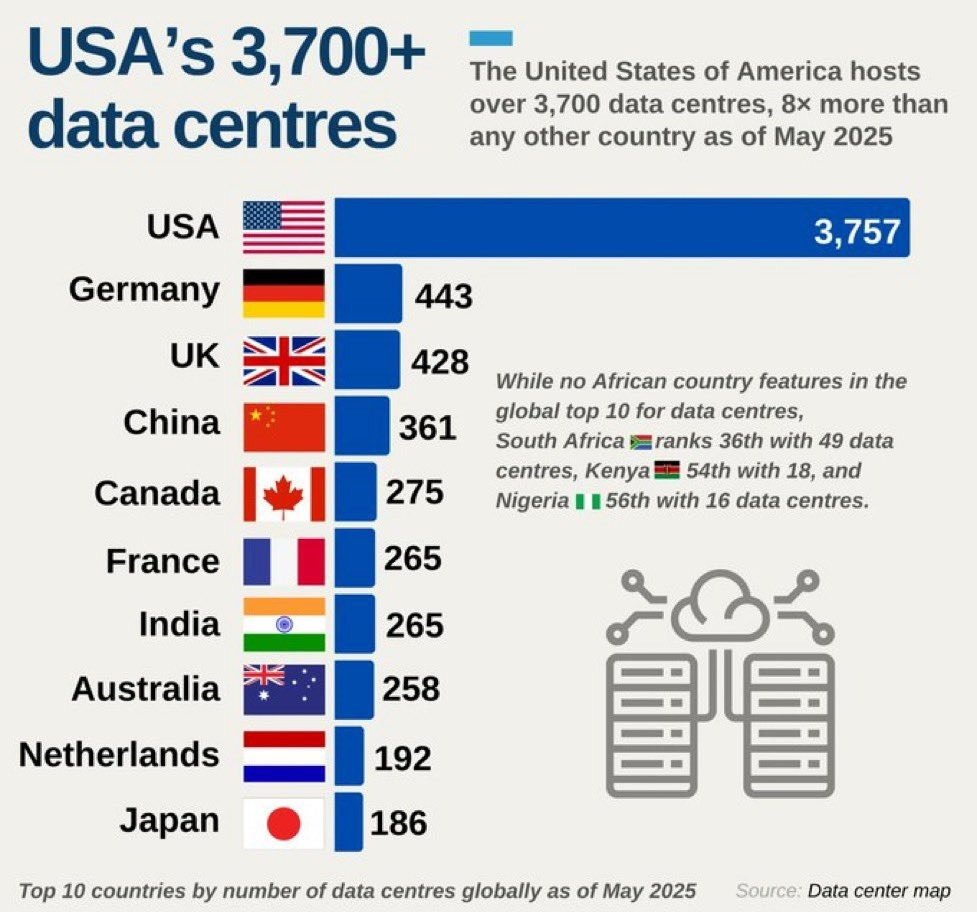
If you look at the chart below, the U.S. has eight times more data centers than any other country on earth. And that was as of mid-2025. The gap has only widened since.
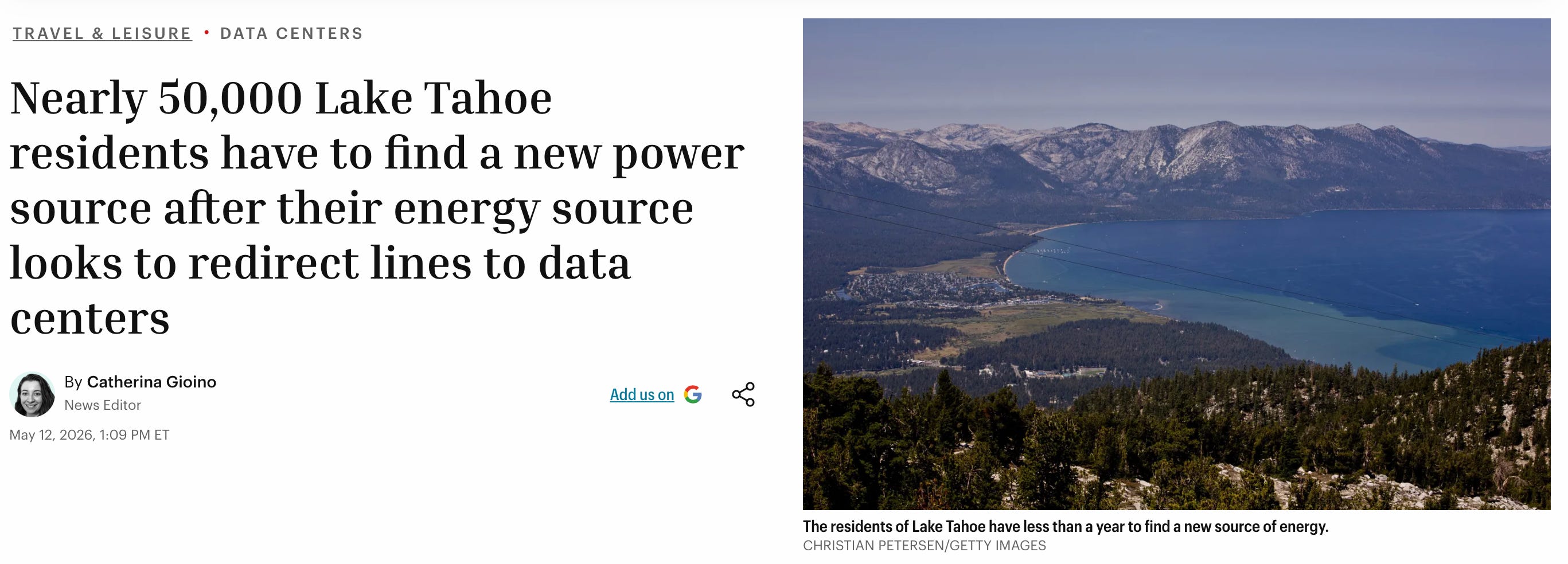
And they need more. A lot more. So many more that nearly 50,000 Lake Tahoe residents just got told to find a new power source because their utility is redirecting power lines to data centers.
Now, I’m not saying all of this is being built for mass surveillance. Obviously a lot of it powers your Netflix binges, your Zoom calls, your kid’s homework assistant, whatever your aunt just asked ChatGPT about her horoscope. But consider the scale of what’s being built.
Tech companies are on track to pour over $700 billion into AI infrastructure this year alone. There are already over 4,500 data centers operating or under construction in the U.S. Meta’s new Hyperion campus in Louisiana covers 3,650 acres. That’s four times the size of Central Park. A single facility. Data centers already account for nearly 5% of total U.S. electricity consumption, a figure that’s more than doubled in the past decade. They now represent half of all new electricity demand growth in the country. Half. By 2030, their share of U.S. power demand could hit 12%, equivalent to the entire United Kingdom’s electricity consumption.
Whatever all this computing power is ultimately used for, the sheer scale of what’s being built goes far beyond what streaming and chatbots require.
As a side note, Bernie Sanders and AOC recently introduced a bill to put a moratorium on new AI data centers. Now, Bernie Sanders — whose favorite country used to be the USSR, also my birthplace — isn’t doing this because he’s worried about people’s privacy. He simply hates corporations. Same goes for AOC. But I suspect a lot of red-blooded Americans who’d never vote for either of them would quietly get behind this one. For the exact reasons I’m writing about this. And you’re reading it.
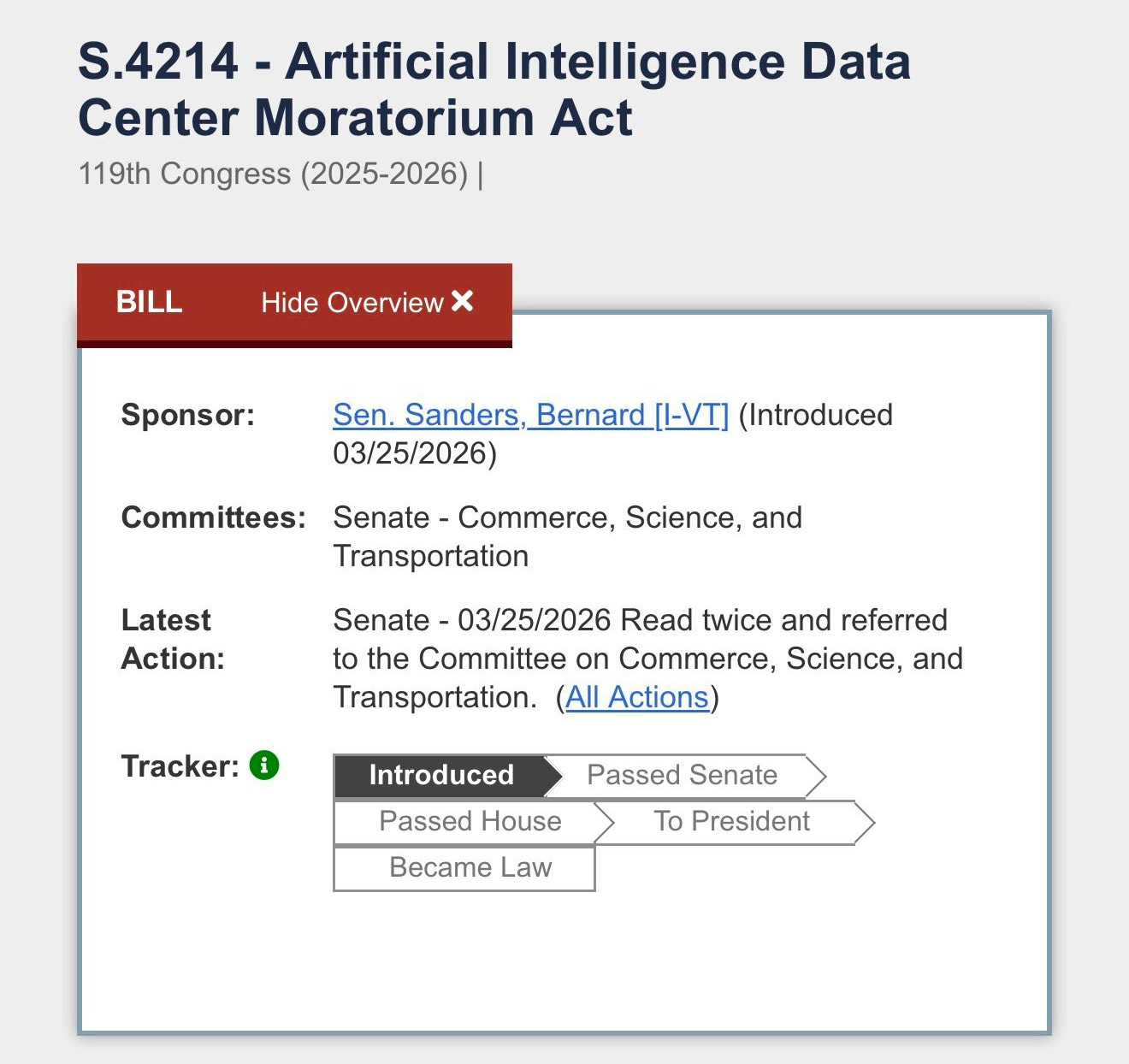
This won’t go anywhere, of course. Not with that kind of momentum behind it.
The Eyes and Ears
So that’s the storage and processing layer. But a brain is useless without eyes and ears to feed it. That’s the collection layer. And it’s being installed everywhere.
I could spend an entire article on cell towers alone. For instance, did you know the FCC — the agency that regulates communications infrastructure — has been pushing to override local zoning laws so towers can be packed as close as every 400 to 700 feet? That’s close enough to pinpoint your phone at all times, indoors or out, whether location services are on or not. But I want to focus on something closer to home. Something most people don’t think of as surveillance infrastructure at all. And it’s the thing you probably spend more time in than anywhere other than your house.
Your car.
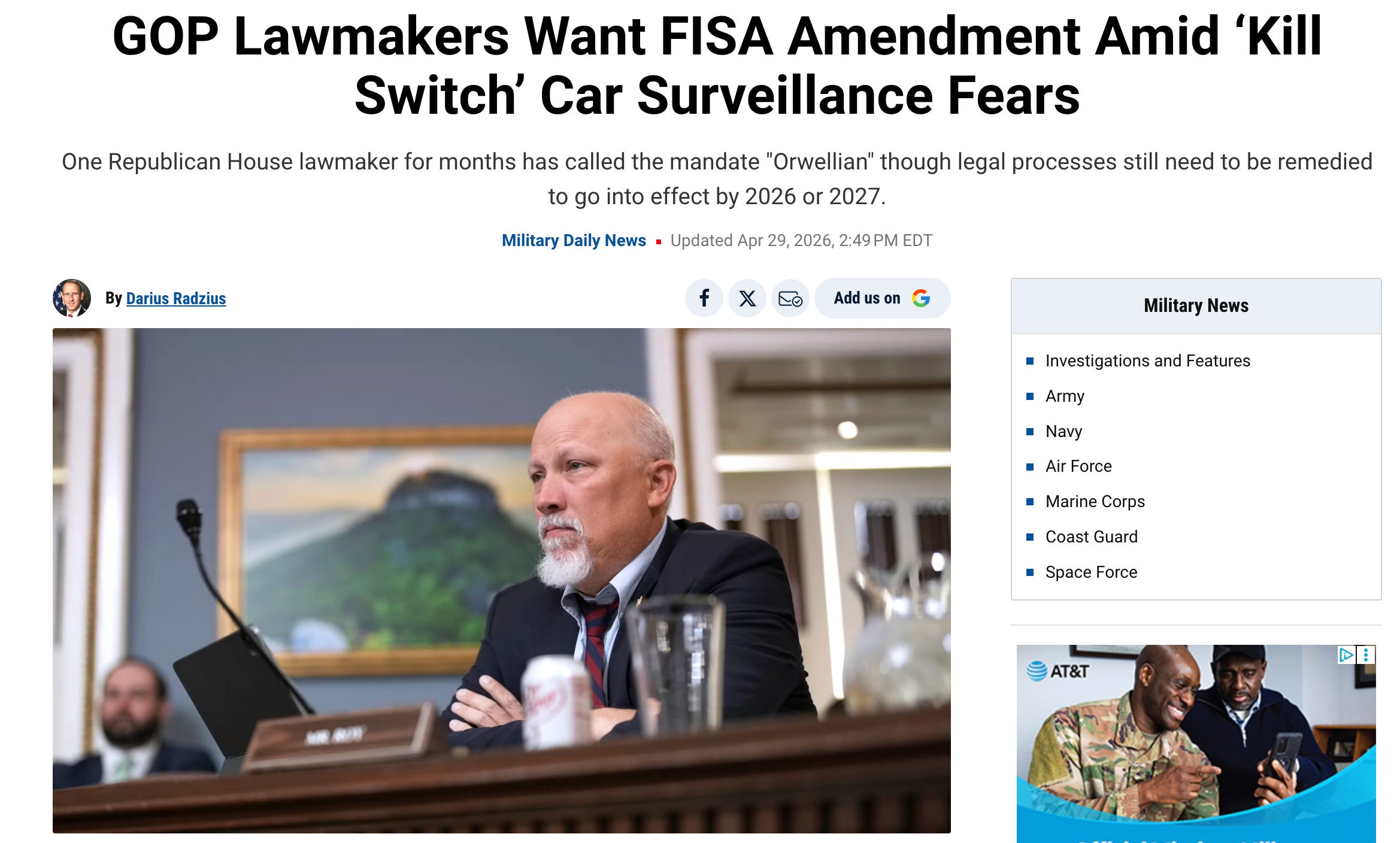
Did you know that every new car sold in America is now legally required to have what’s called a kill switch? A remote disable function that can shut your vehicle down. Congressmen Thomas Massie and Chip Roy have been trying to get the requirement removed, but as of right now, it’s the law. The car monitors your driving, and if the system decides you’re not fit to drive, it can stop you from shifting out of park.
But the kill switch is just the beginning.
Take Ford, the quintessential all-American brand. The company has filed a stack of patents in the past couple of years that would turn your car into something that looks a lot more like a surveillance device than a vehicle. And I’m not talking about theoretical concepts. These are filed at the U.S. Patent and Trademark Office with serial numbers. Here’s a quick rundown of the ones that caught my eye, and this is not an exhaustive list:
In-cabin cameras trained on lip-reading technology. Machine learning algorithms that process lip movement datasets, cloud-connected, with your face analyzed on a server somewhere you’ll never see, stored as long as they want.
Acoustic lip reading. If the cameras aren’t enough, the system emits inaudible sound waves and reads the echoes bouncing off your mouth. You can’t see it. You can’t hear it. It’s just happening.
A biometric patent that takes your face, your iris, your fingerprint, and runs it through a criminal database in real time. While you’re sitting in your own car. On your own property. Before you’ve done a single thing wrong. Ford’s own patent language describes this as “potentially useful for police.” You didn’t know you were buying a cop car.
An ad patent that monitors conversations between everyone in the cab and serves targeted advertisements based on what you and your passengers are talking about. In Ford’s own words: “maximum opportunity for ad-based monetization.” No description of how that data is protected. None.
And this isn’t just on paper. Ford already has a product called Ford Pro Telematics. Right now, today, fleet managers can pull up live in-cabin video feeds of their drivers on their phones. Ford markets this with “seatbelt compliance alerts” and the helpful benefit of lowering insurance costs.
And Ford isn’t alone. A couple of years back, Mozilla, the nonprofit behind the Firefox browser, looked at 25 major car brands, including Volkswagen, BMW, Toyota, and Tesla. And guess what they found. Most of them collect massive amounts of biometric and passenger data. Some of their privacy policies explicitly allow for the sale or sharing of that data.
Speaking of Tesla. Just this weekend, my son and I went on an autonomous Tesla ride. I wanted the kid to see the future. And he loved it, genuinely, which was a relief given how hard it is to get a near-teenager interested in anything these days.
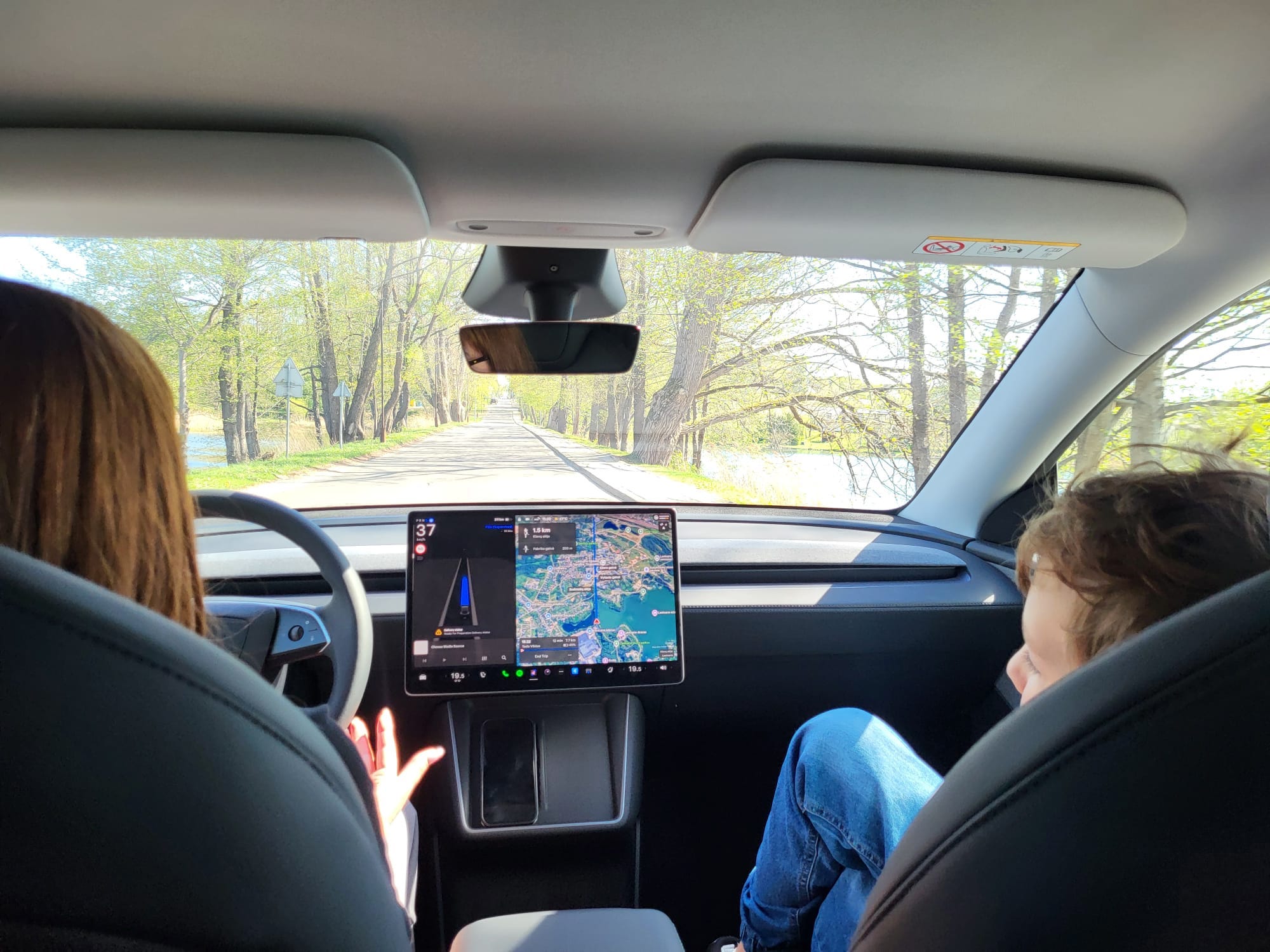
But the whole time, I kept thinking about the fact that police departments across the U.S. have started hunting for Teslas parked near crime scenes just to seize their camera footage. If they can’t find the owner, they tow the car. And unlike some other tech companies, Tesla just hands everything over. So you have a situation where your car isn’t just watching you. It’s watching everyone around you. And it’s feeding all of it to the authorities.
I asked the operator about it. She said it helps fight crime. I said, sure, nobody’s arguing against catching murderers. But where’s the line? Who decides what counts as a crime worth surveilling? And once that footage exists, who controls where it goes? If you have a company that will comply with whoever happens to be in charge, surely that’s a problem. Maybe you haven’t done anything wrong. But maybe you showed up at a protest that fell out of favor. Maybe you said something in your car that aged badly.
She smiled. “If you have nothing to hide, you have nothing to worry about.” I almost laughed. She said it like it was a selling point.
Not Just an American Thing
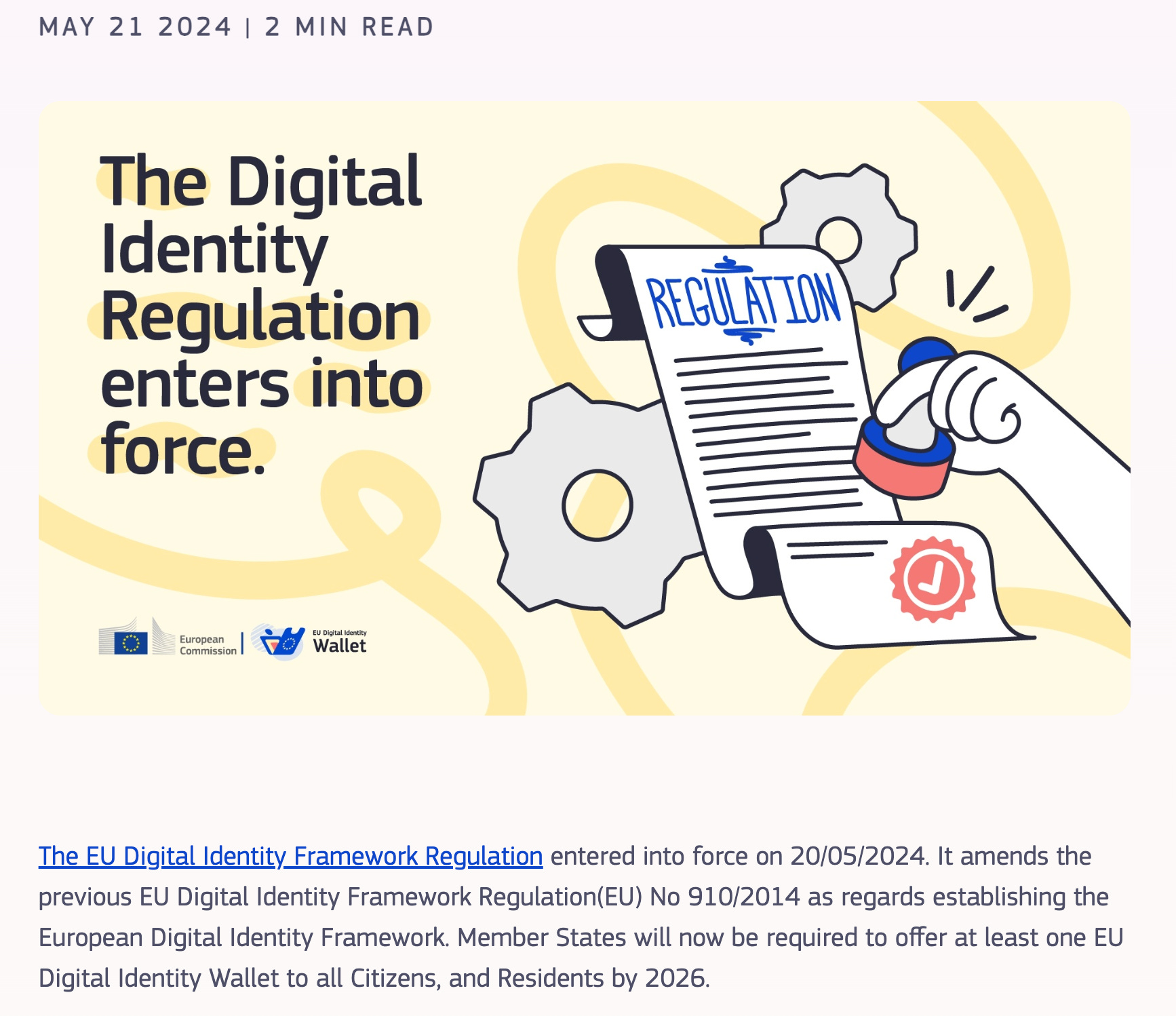
Here in Europe, where I spend part of the year, the EU mandated that every member state must offer its citizens a digital identity wallet by the end of 2026. Your government ID, your driver’s license, your health records, your financial credentials, all in one app, all on your phone. Twenty-seven countries. 450 million people. Pilots are already running across the continent.
And you can sort of see their point. When everything around you is crumbling, when the economy is buckling and the social fabric is fraying, the instinct is to tighten the grip. Keep people in check.
When I first heard about that, something went off in my head. Because I grew up in a country where the government tracked people with informants and paper files. It was brutal, but it was also slow. It took manpower. It took bureaucracy. And people found workarounds.
The new version doesn’t need informants. It doesn’t need paper. It doesn’t need manpower. It just needs the phone in your pocket and the car in your driveway. And it all runs on autopilot.
In a future piece, I’ll show how the three pillars, the identity system, programmable money, and the hardware, connect to each other. Because individually, the people in charge can at least attempt to explain each one away to you. Digital IDs are “convenient.” Programmable money is “efficient.” Driver monitoring technology “keeps you safe.” But step back and look at them together, and the smoke clears. What you’re looking at is a digital prison being built in real time.
Regards,
Lau Vegys
I’m trying very hard to get around all this by driving an older car, having hard assets and only keeping a minimal amount in a bank account, living in the country, using cash etc etc. But someone down the road has a Ring camera that records me every time I drive past. The nearest city, where I sometimes need to go, has Flock cameras everywhere. What on earth can we do!!??
Nothing to worry about (that’s a joke). This is the third report I read about this stuff in just two days! And when three different people are talking about it, it’s most likely true. And a legitimate threat.